
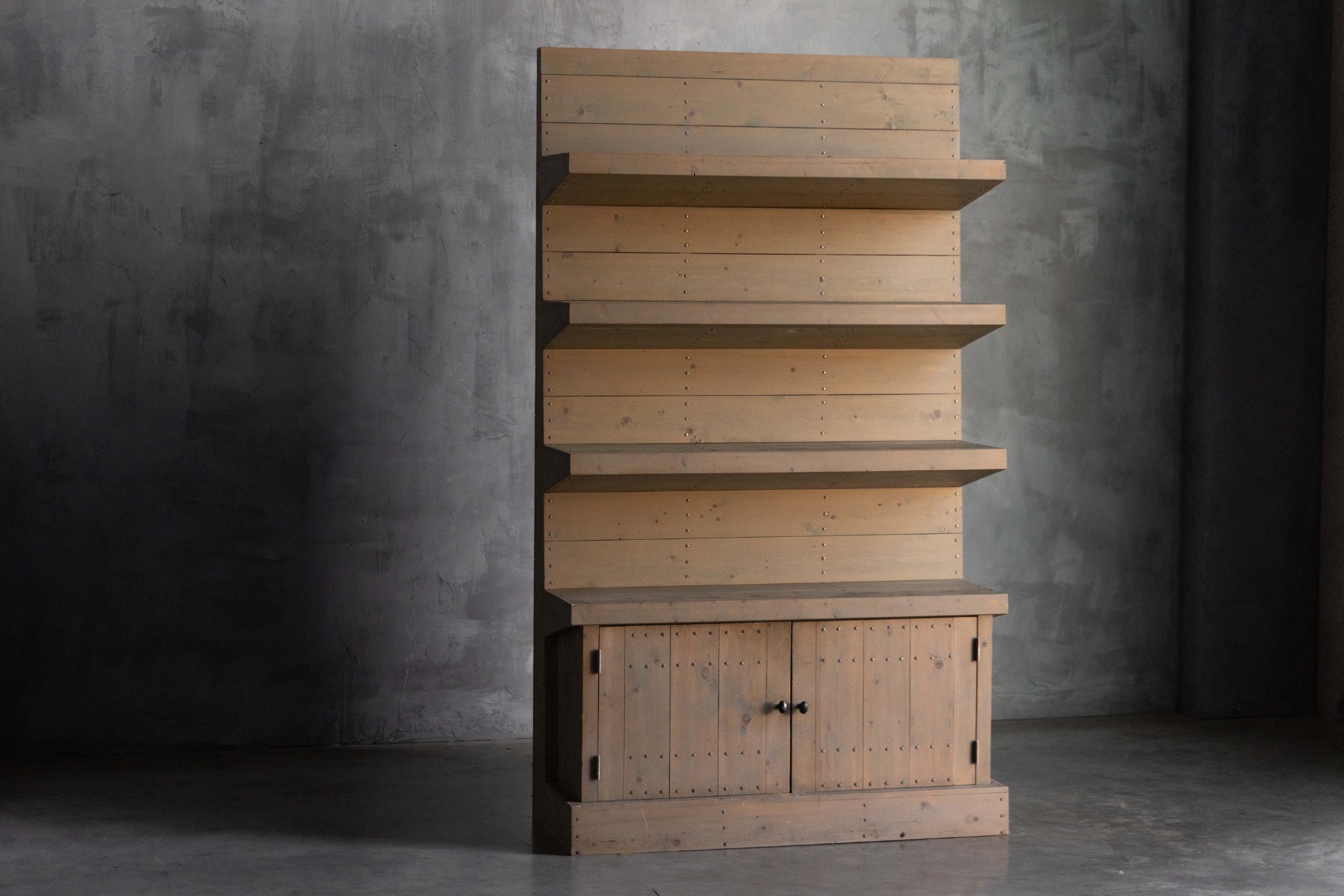


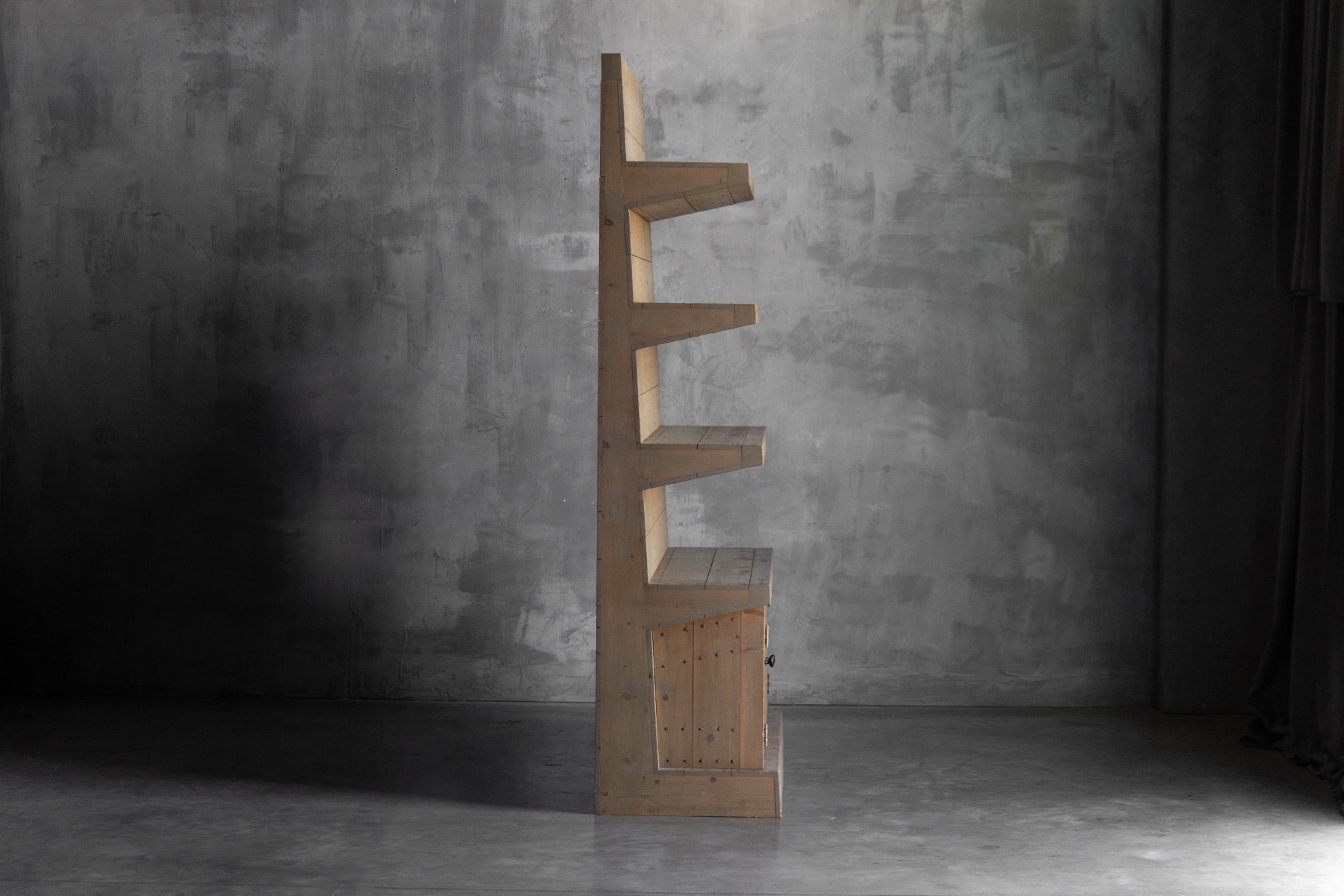


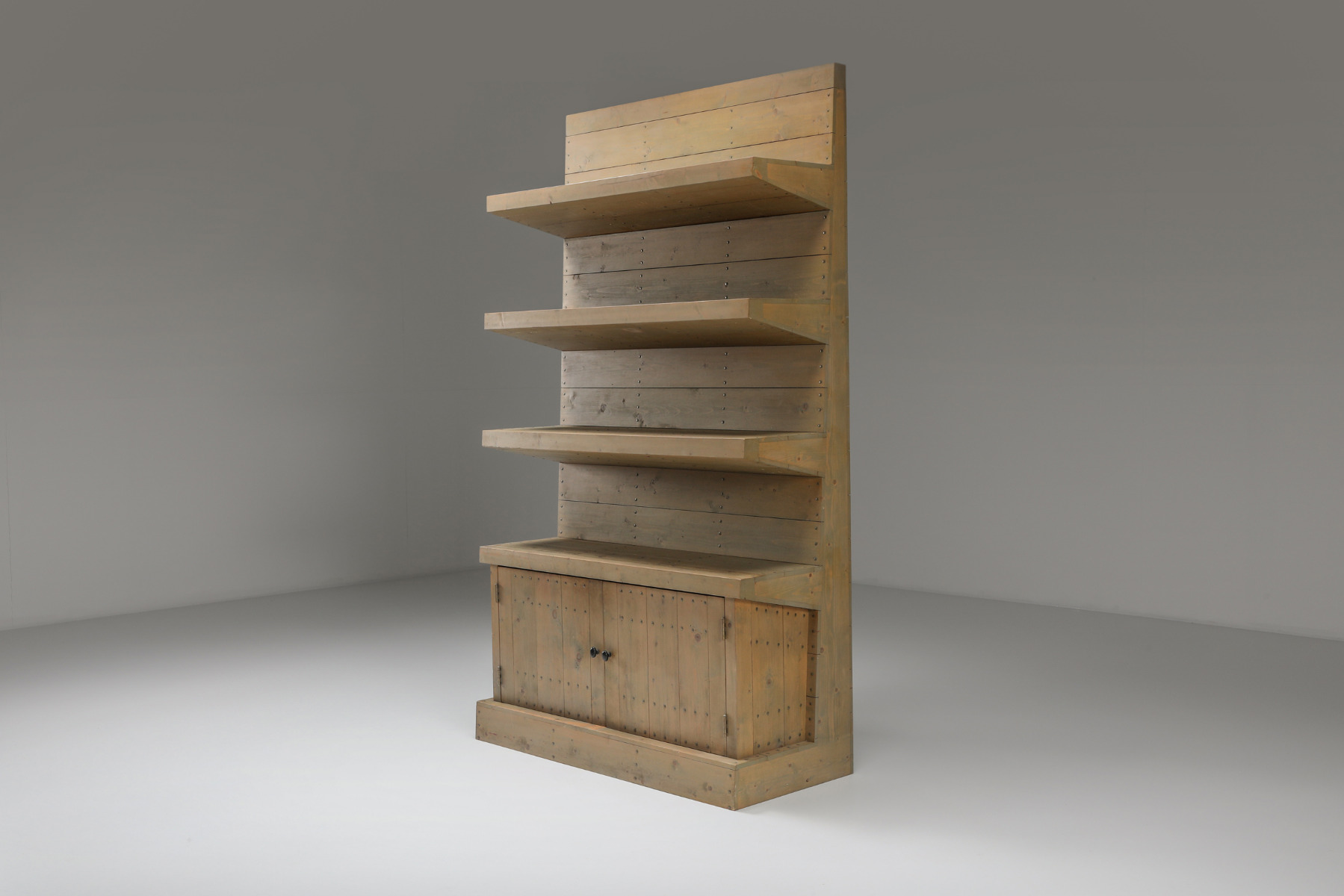
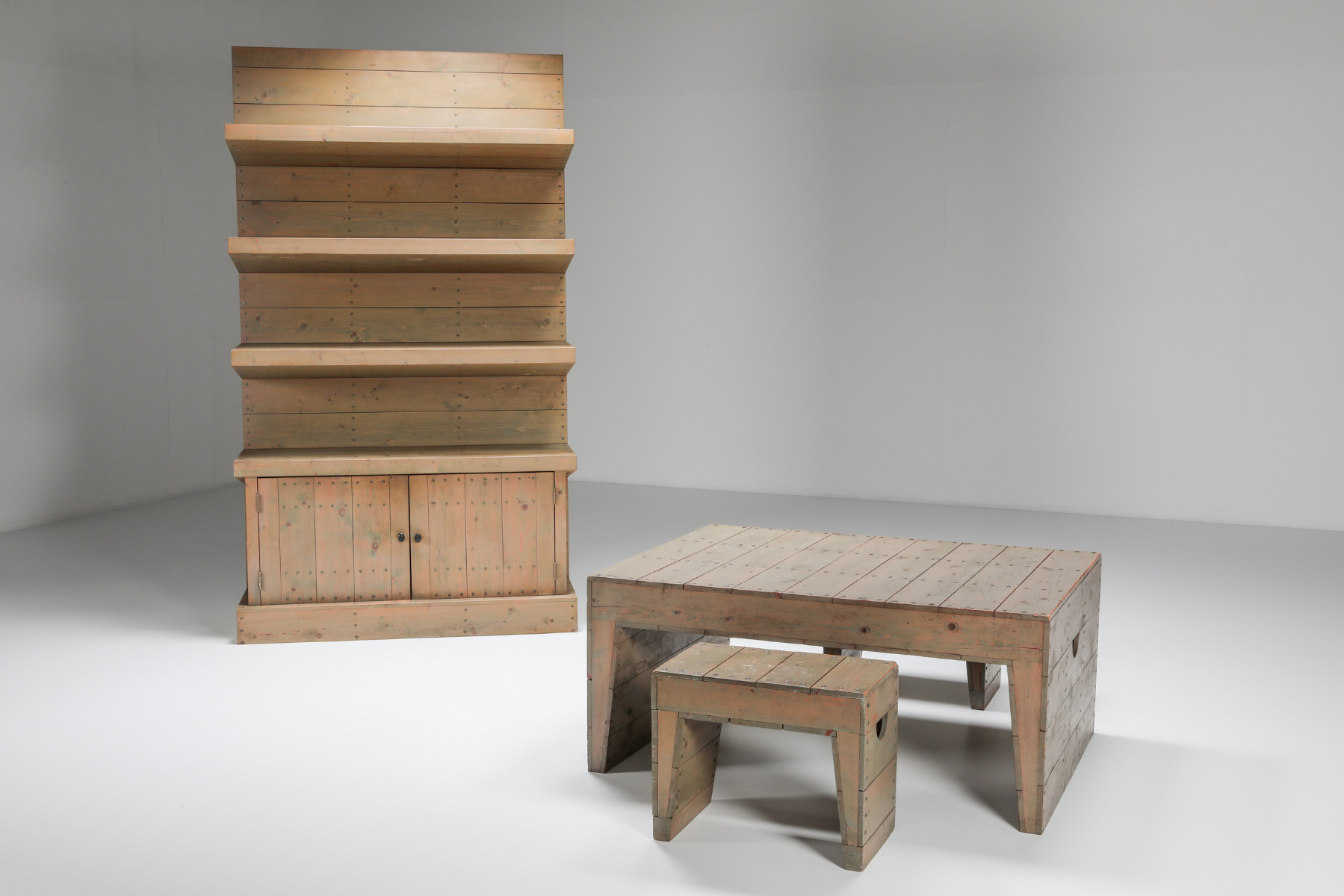
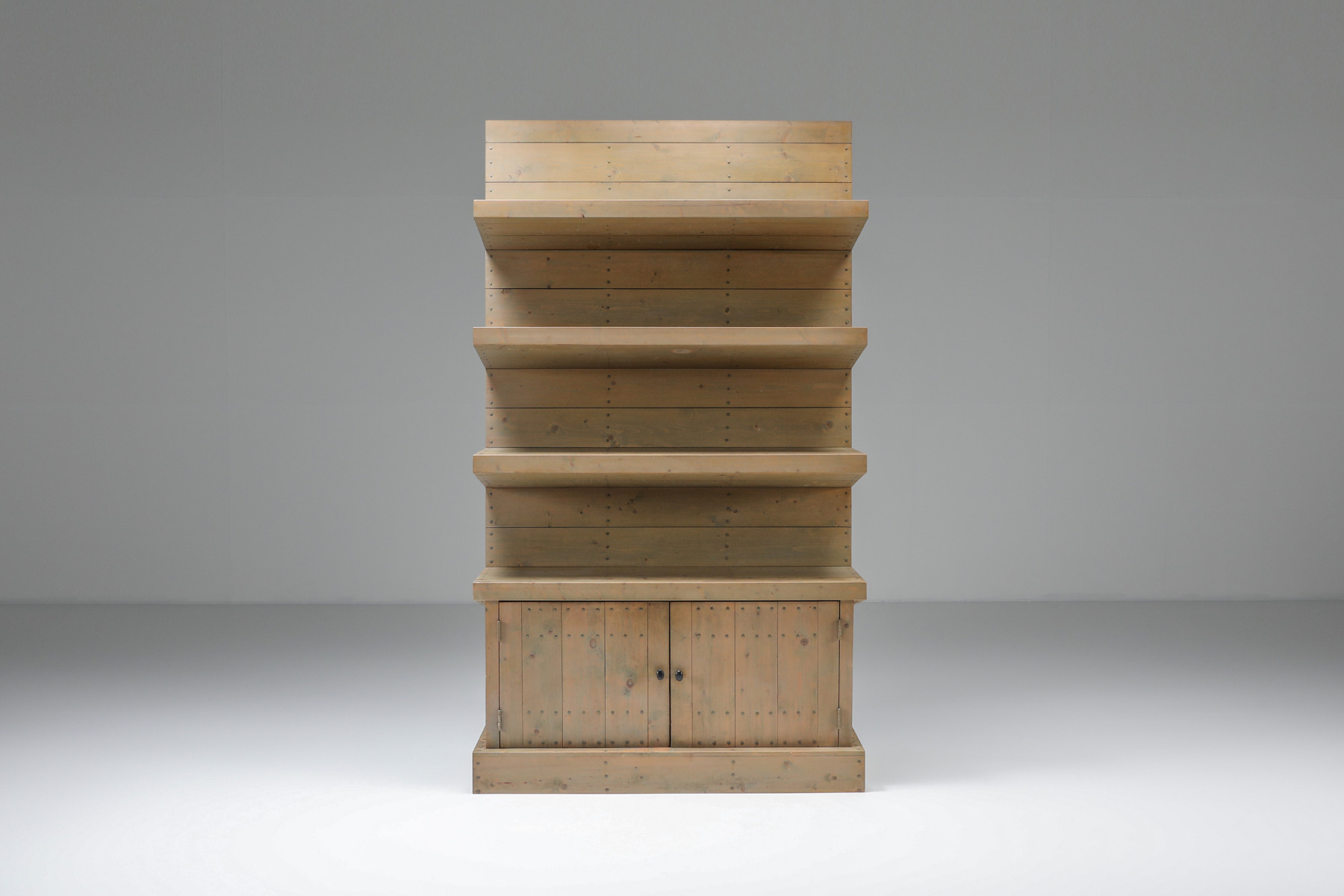
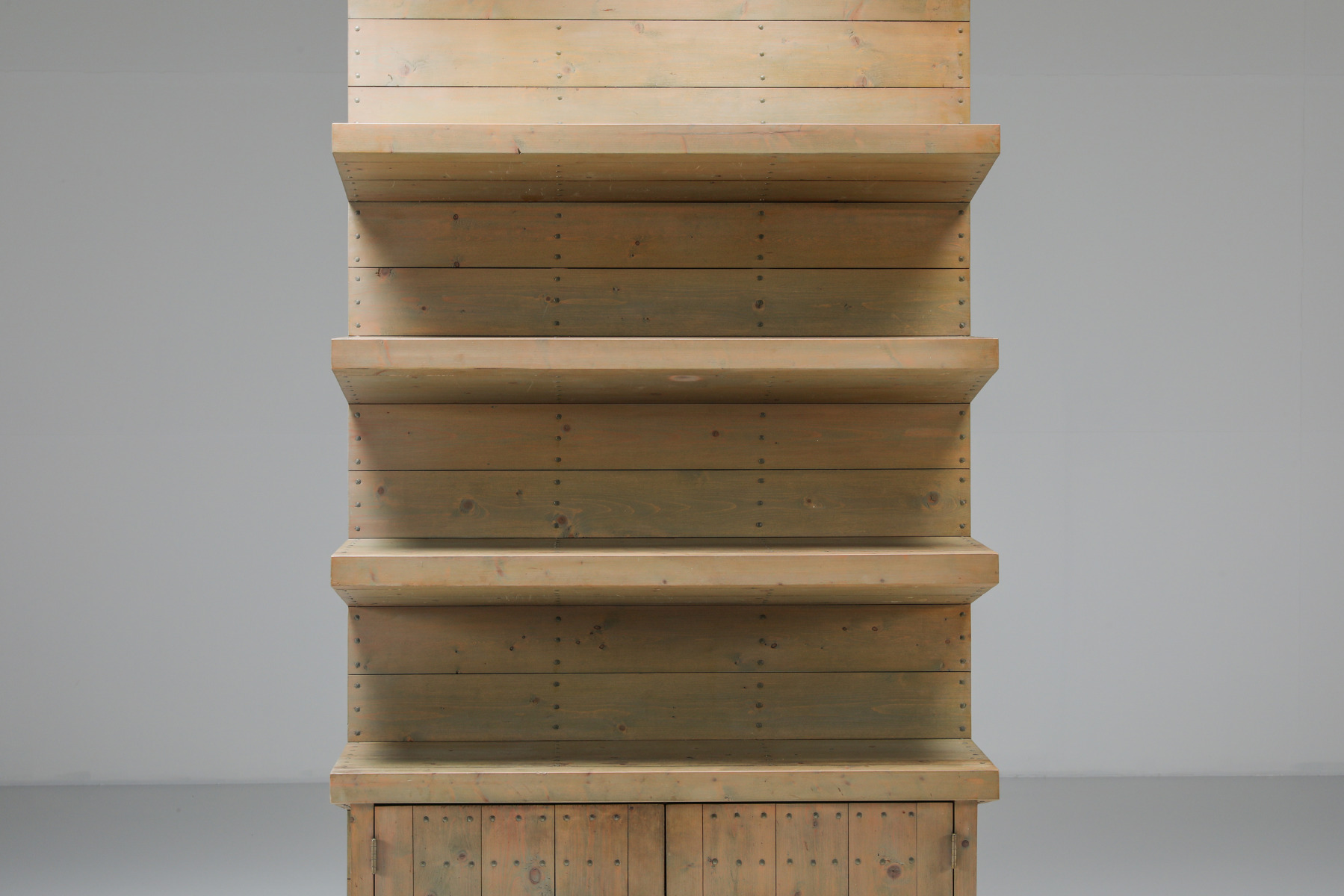
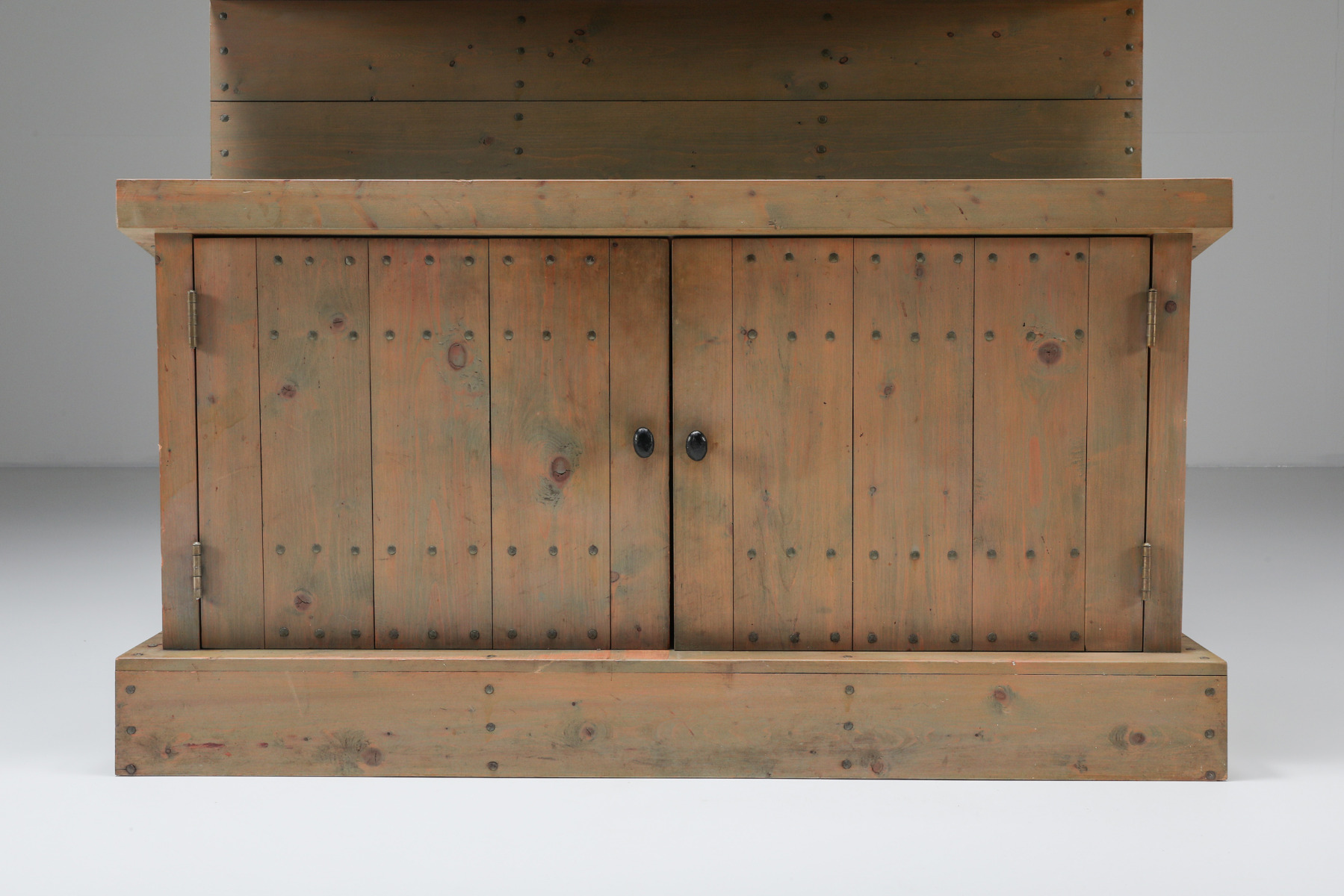
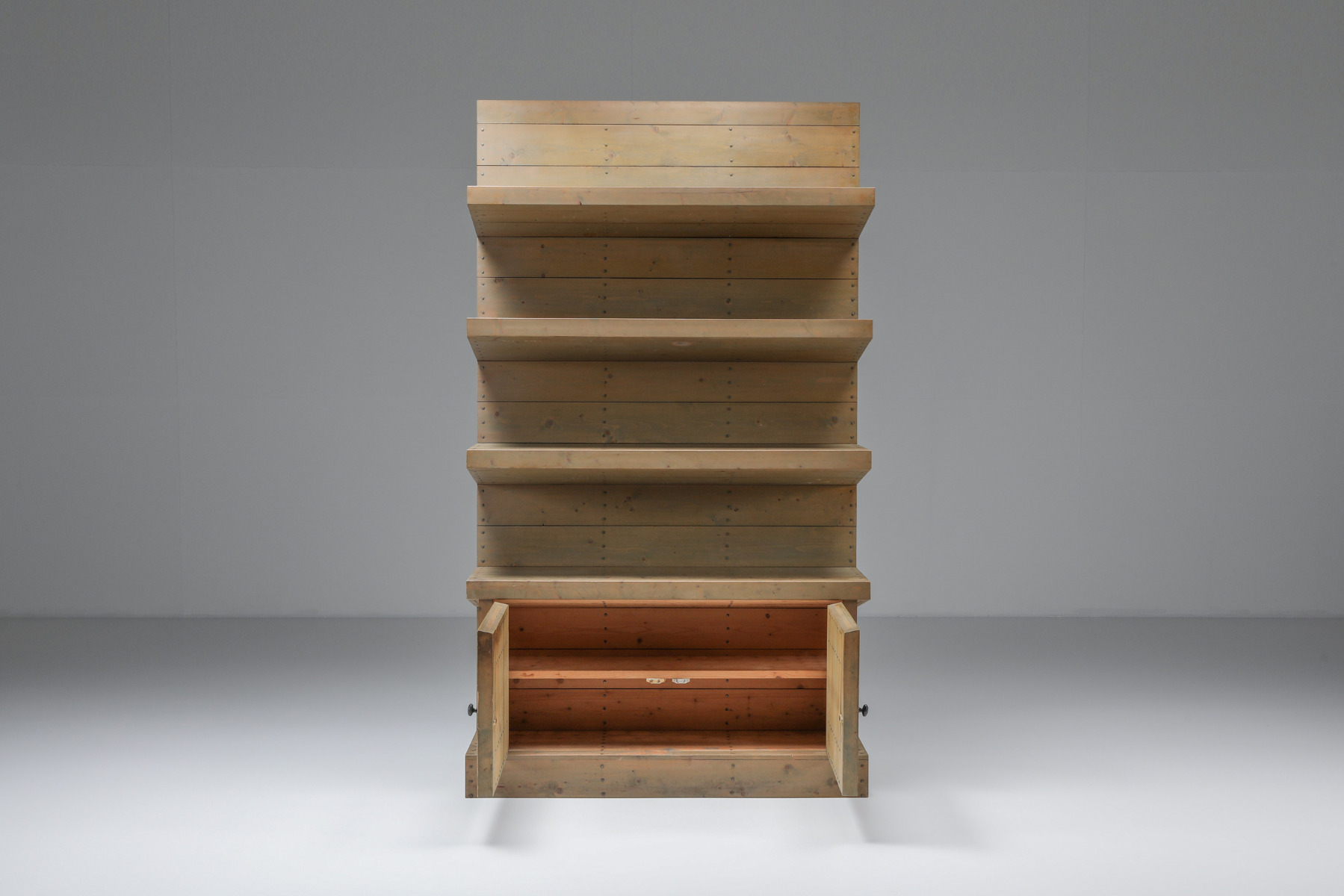

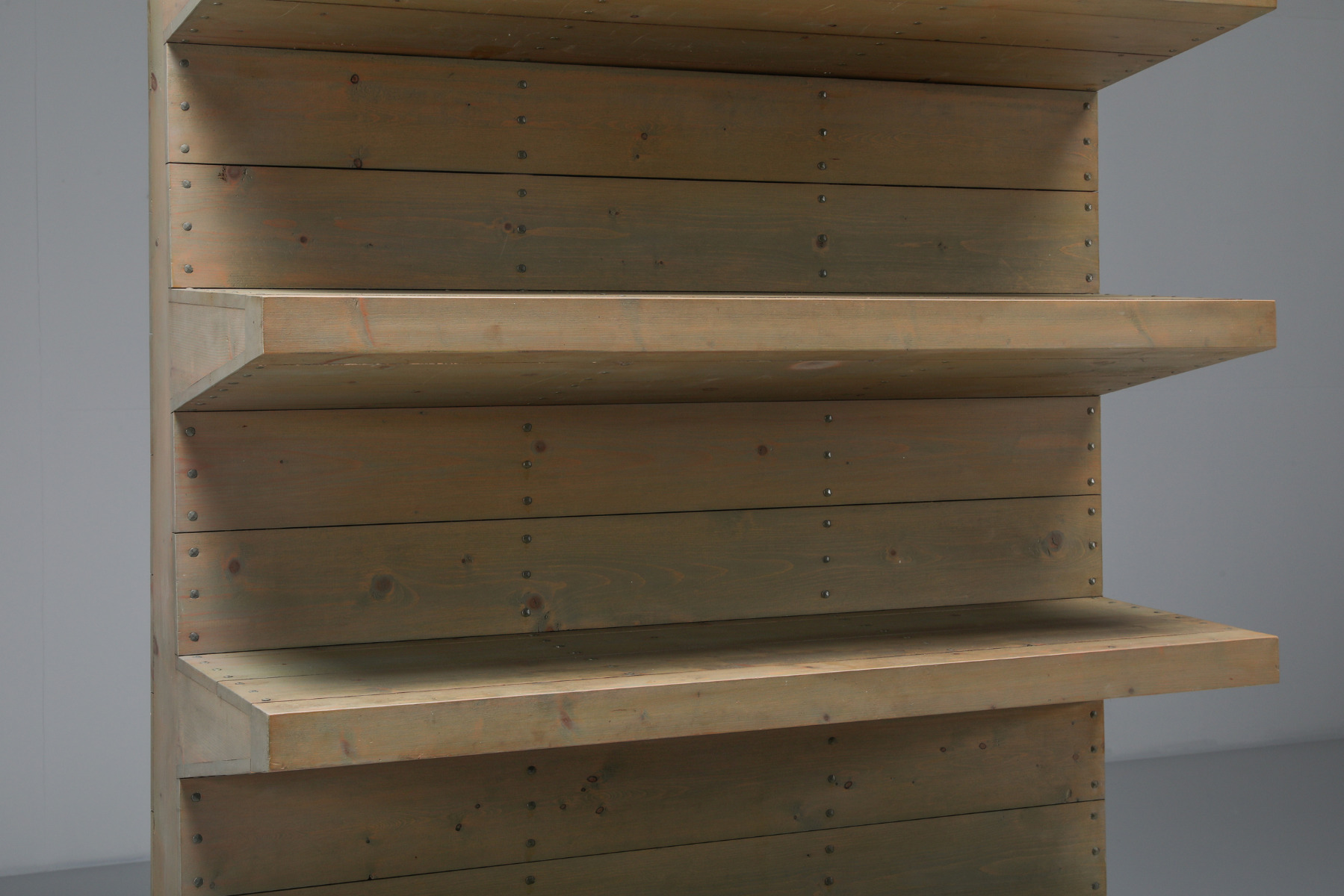
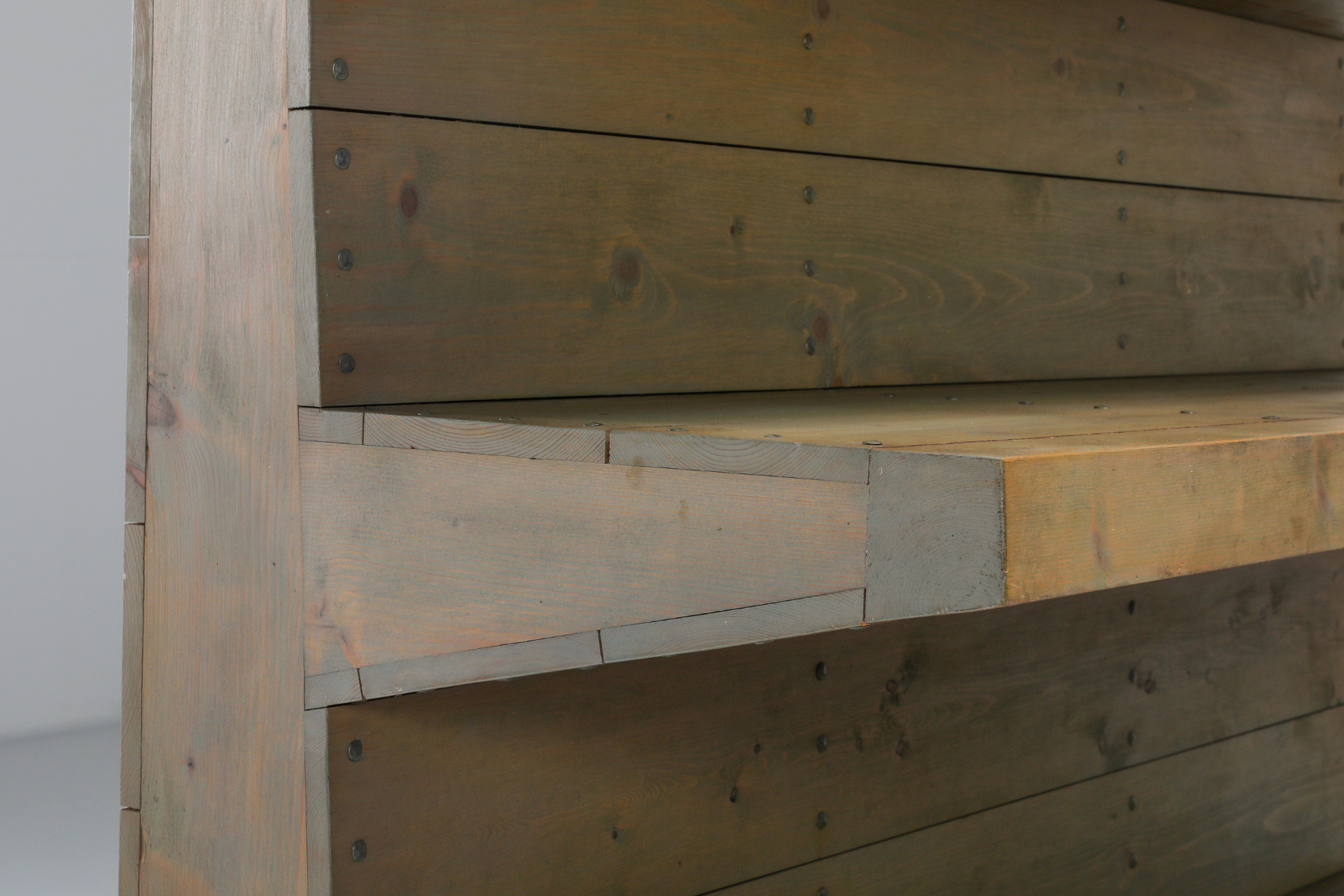
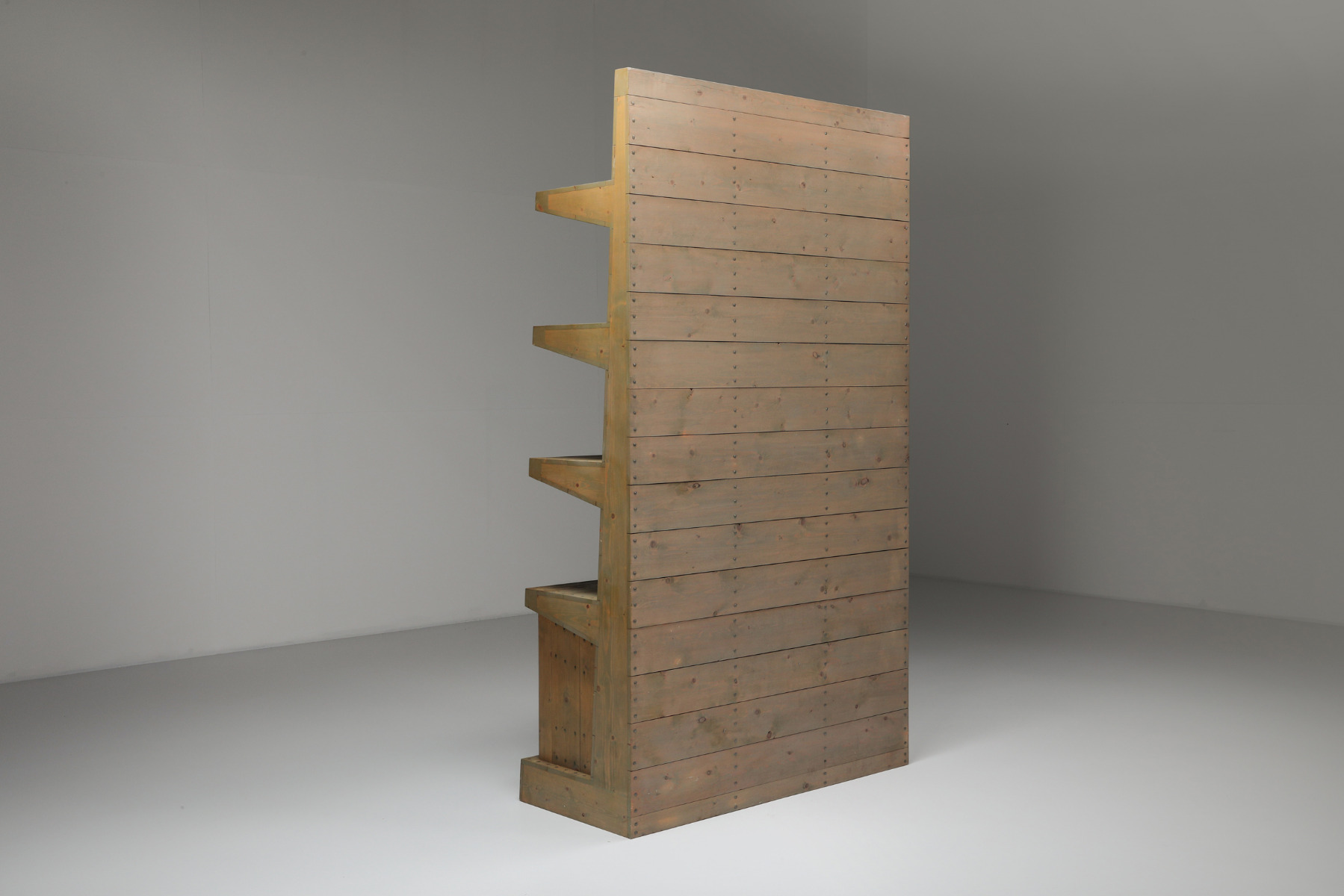
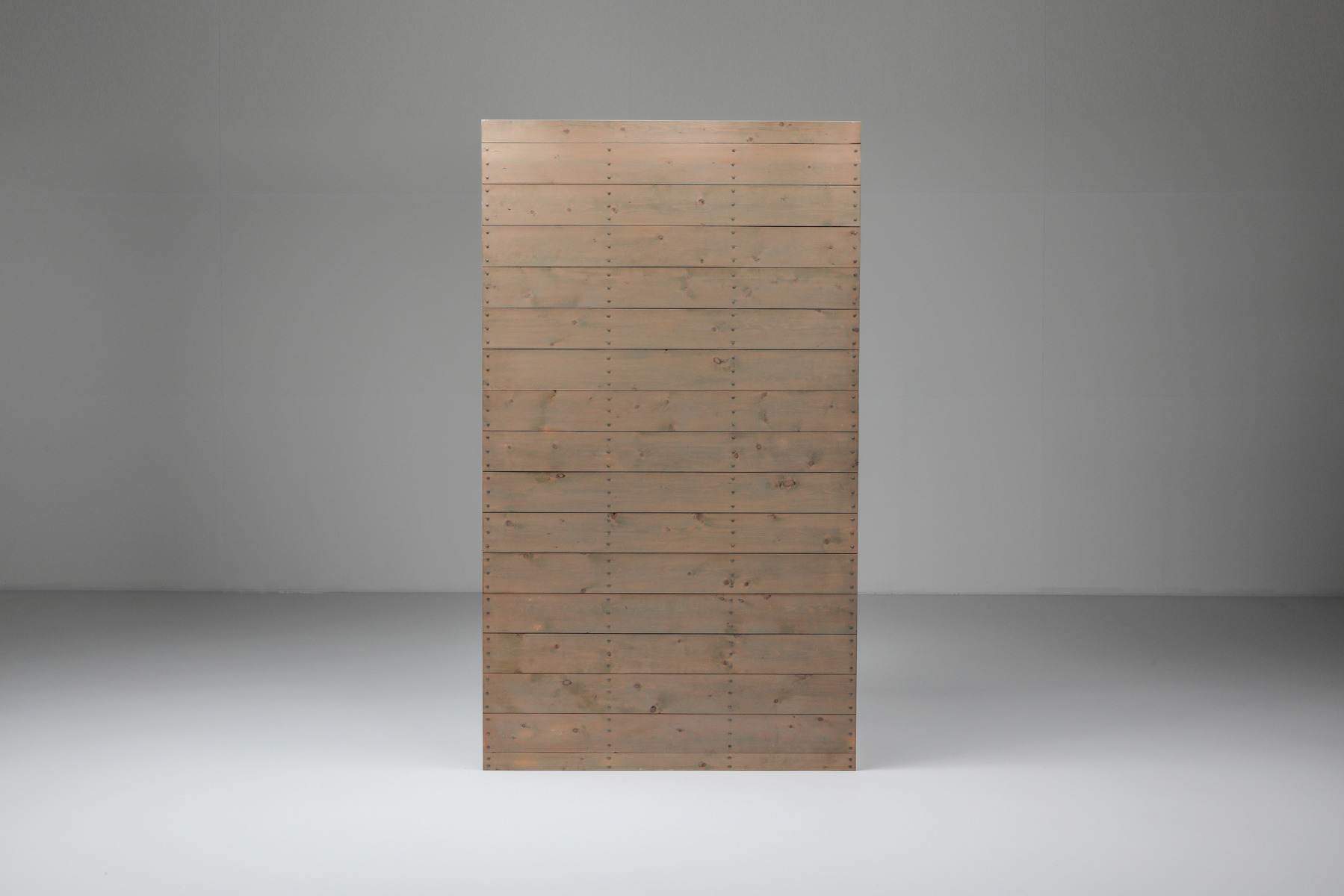

A rare architectural wall unit by Dom Hans van der Laan, exemplifying the harmonious proportions and restrained aesthetic of the Bossche School.
Wall Unit by Dom Hans van der Laan, Netherlands, 1950s
Description
This rare Bossche School shelving unit, produced in the Netherlands during the 1970s, was acquired directly from the studio of Dutch architect Jan de Jong and remains in its original condition, retaining its original olive green finish and plastic numbering. An early example of the architectural furniture developed within the Bossche School, the shelving reflects the rigorous proportional system derived from the theories of the Benedictine monk, architect, and architectural theorist Dom Hans van der Laan. During the post-war reconstruction period, Jan de Jong collaborated closely with Van der Laan on numerous architectural commissions, designing both buildings and their integrated interiors. Characterised by restrained geometry, functional clarity, and carefully balanced proportions, this shelving unit exemplifies the architectural ideals that defined one of the Netherlands' most significant post-war design movements.
The shelving originates from an exceptional private residence in Oirschot, a 17th-century village house designated as a Dutch national monument, with documented occupants dating back to around 1650. Originally divided into three separate dwellings in the early nineteenth century, the property was reunited during a comprehensive restoration in the early 1970s under the direction of Bossche School architect Louis de Kok. The unusual floor plan, centred around five substantial fireplaces suggests that the house may once have accommodated several canons, each occupying a private chamber, a theory further supported by its location adjacent to the church and the historic Kanunnikensteeg. The interior colour scheme was selected on site by artist Wim Hooft, who collaborated with Jan de Jong and Dom Hans van der Laan on colour studies for a number of Bossche School projects. The shelving's original olive green finish corresponds to one of these carefully considered palettes, further strengthening its architectural integrity and provenance. Preserved with remarkable authenticity, this piece represents not only an important example of Dutch architectural furniture, but also a tangible document of the close collaboration between architecture, interior design, colour theory, and proportion that defines the legacy of the Bossche School.
GW1732
- Materials
- Origin
- Dimensions
- Stock
I have a question about this product
Shipping Quote
-
EU€
-
Continental US€
-
Rest of worldPrice upon request
-
Local pickupFree of charge
Mario Bellini's Camaleonda Sectional Sofa - 1970s
Your Details: