WABI-SABI
In an age devoted to refinement and perpetual newness, wabi-sabi offers a quieter perspective. It invites us to appreciate not what is flawless, but what is authentic; not what resists time, but what reveals it.
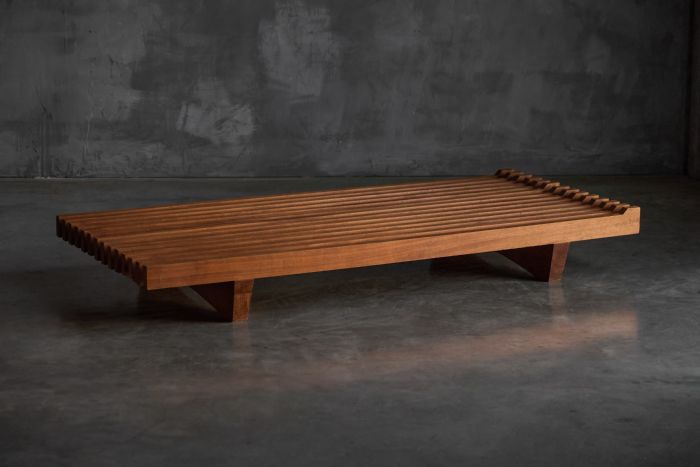
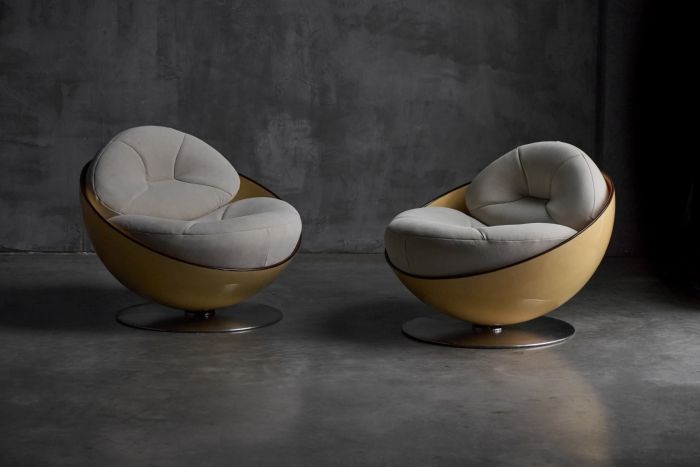
This exhibition brings together a curation of pieces that embody that sensibility. Objects and furniture chosen not for perfection, but for their honesty of material, craftsmanship and presence. A solid oak dining table revealing the richness of its grain. A sculptural chair whose texture invites touch. A handcrafted cabinet marked by the gentle irregularities of the maker’s hand. These qualities are not imperfections in need of correction; they are expressions of character. They remind us that beauty often resides in what is unique, unfinished and quietly evolving.
Rooted in centuries of Japanese thought, wabi-sabi is often described as an appreciation of impermanence, simplicity and incompleteness. Yet its essence extends beyond aesthetics. It is a way of seeing the world through acceptance rather than control. Principles such as kanso (simplicity), shizen (naturalness) and fukinsei (asymmetry) encourage a profound respect for materials in their most honest state. Wood, stone, clay and linen are valued not despite their ageing, but because of it. Patina is not viewed as deterioration, but as enrichment — a visible record of time, use and existence.