
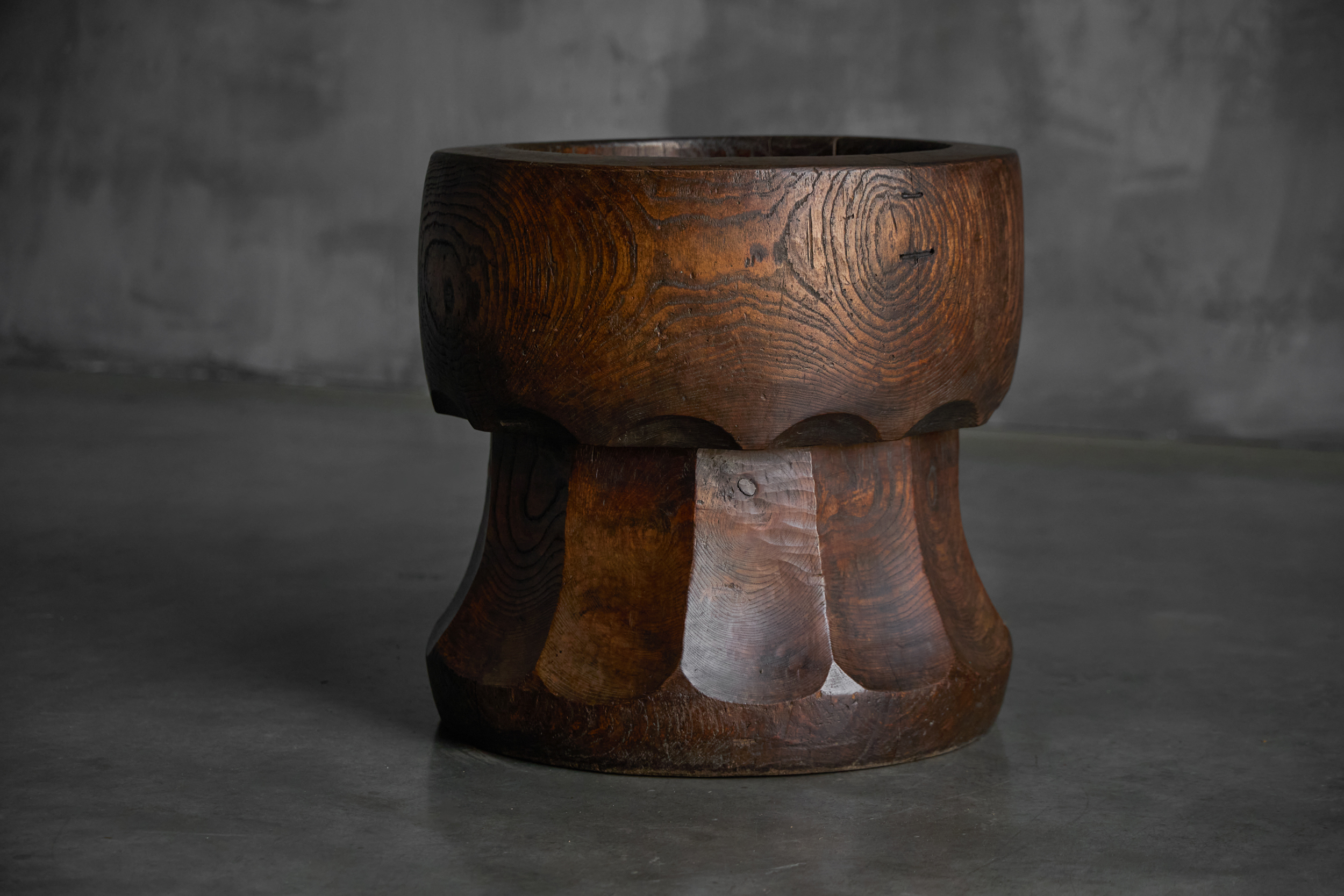
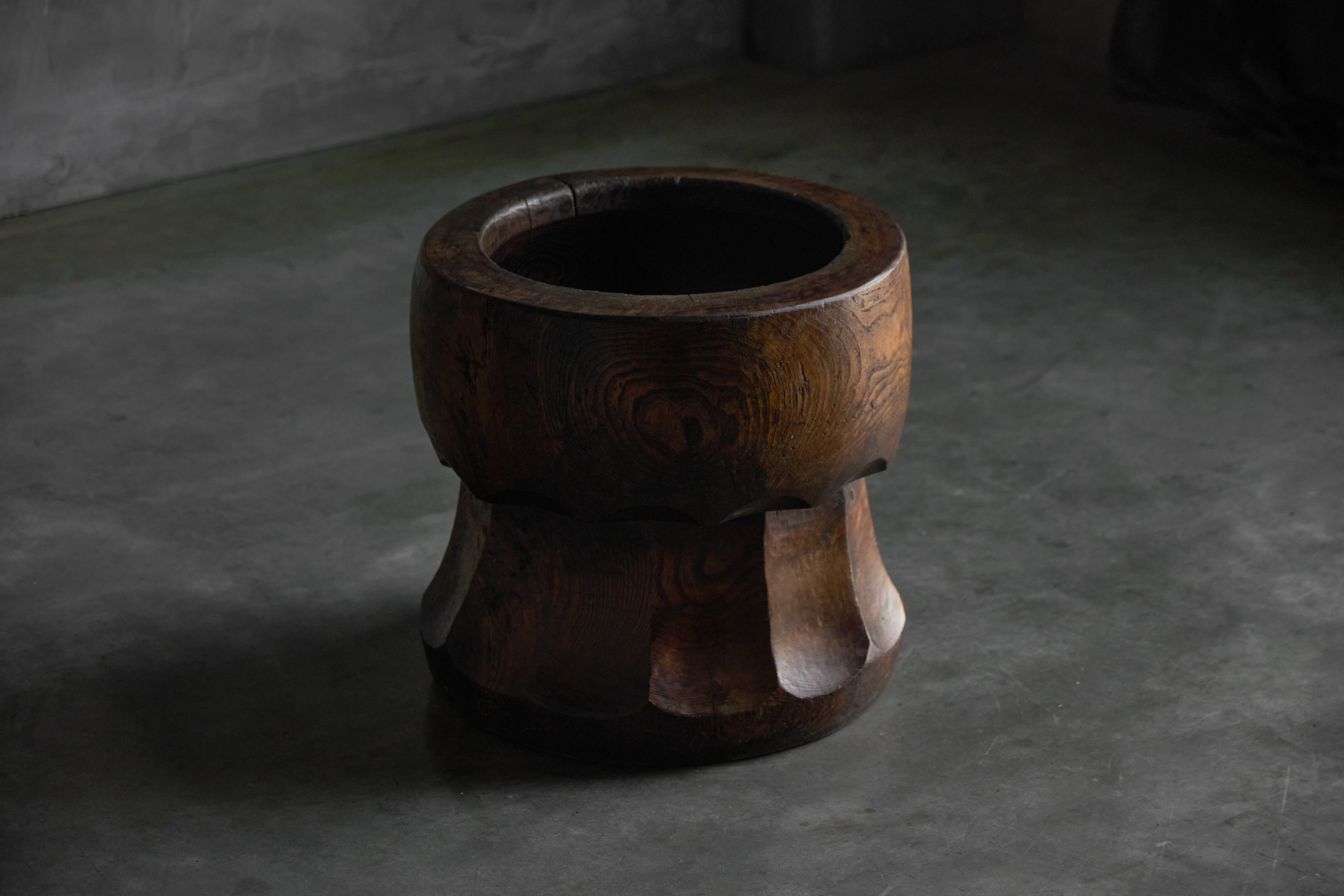
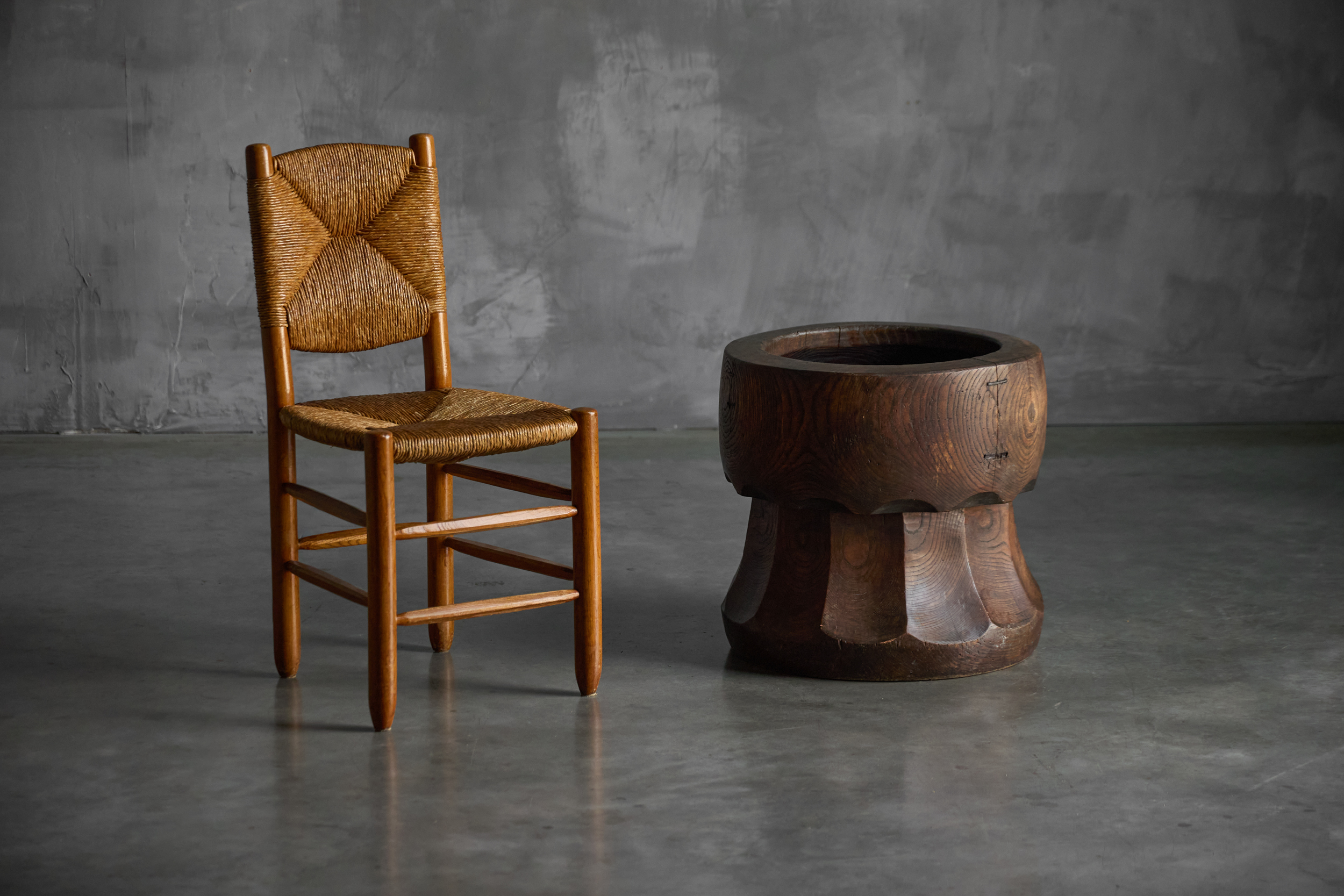
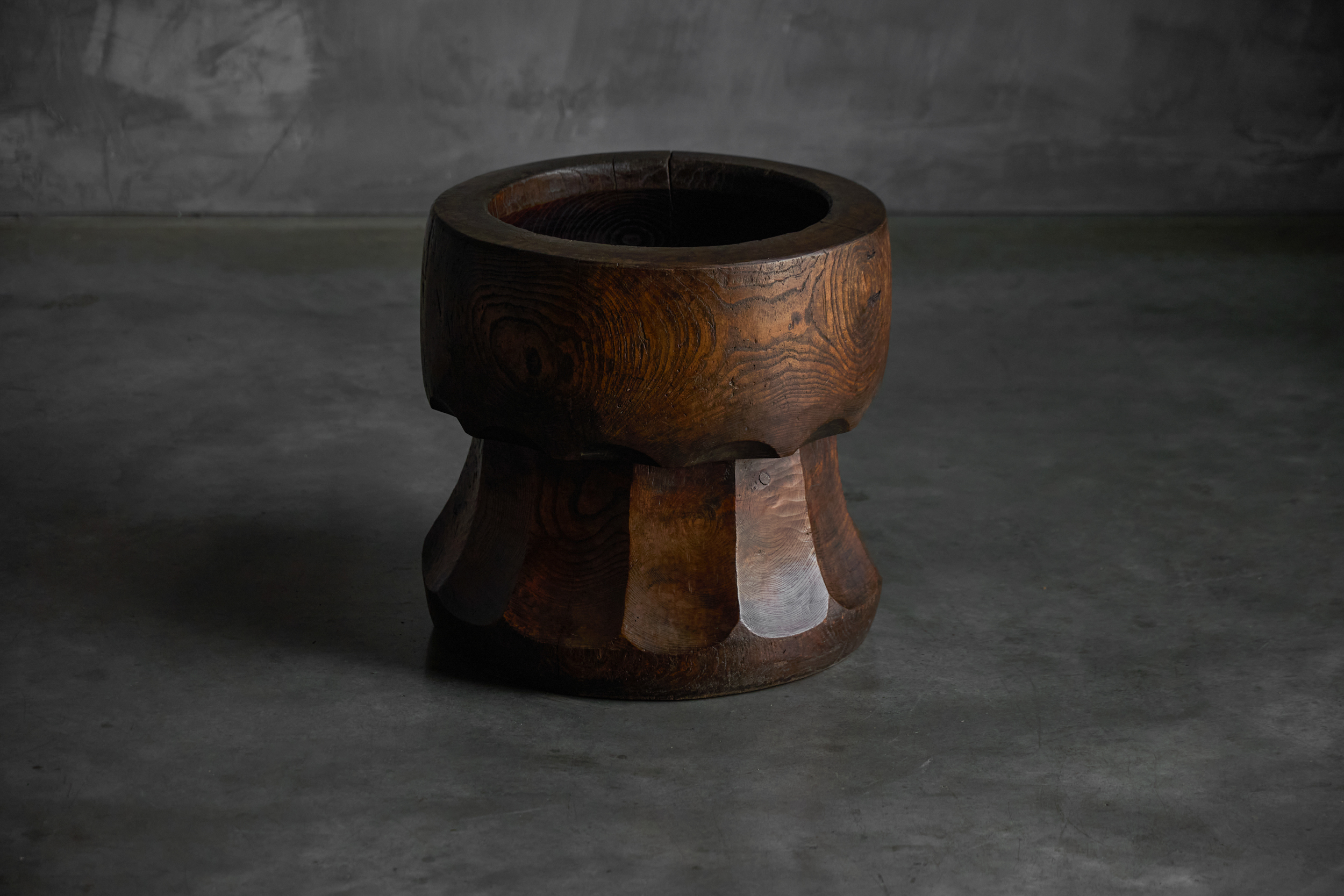
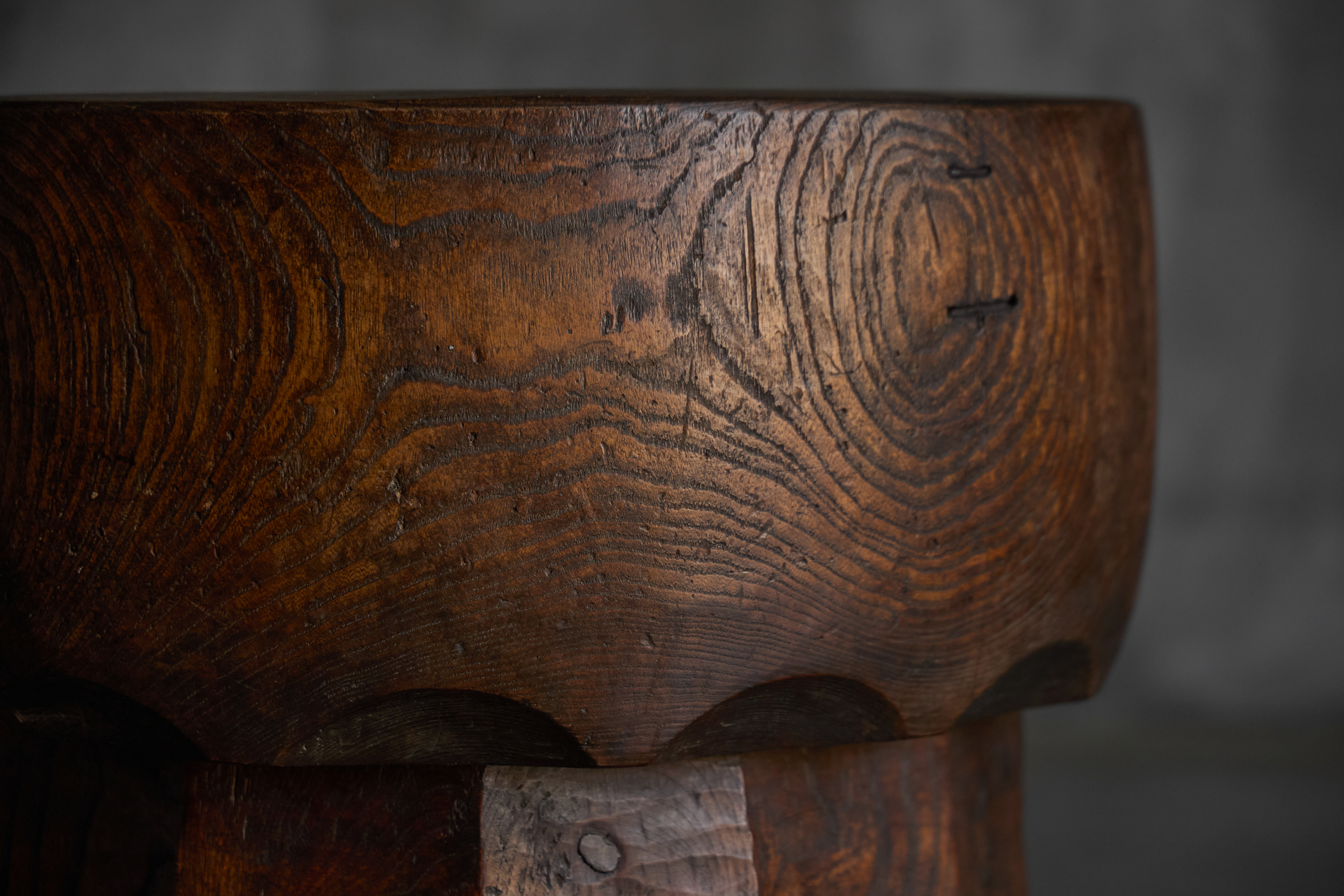
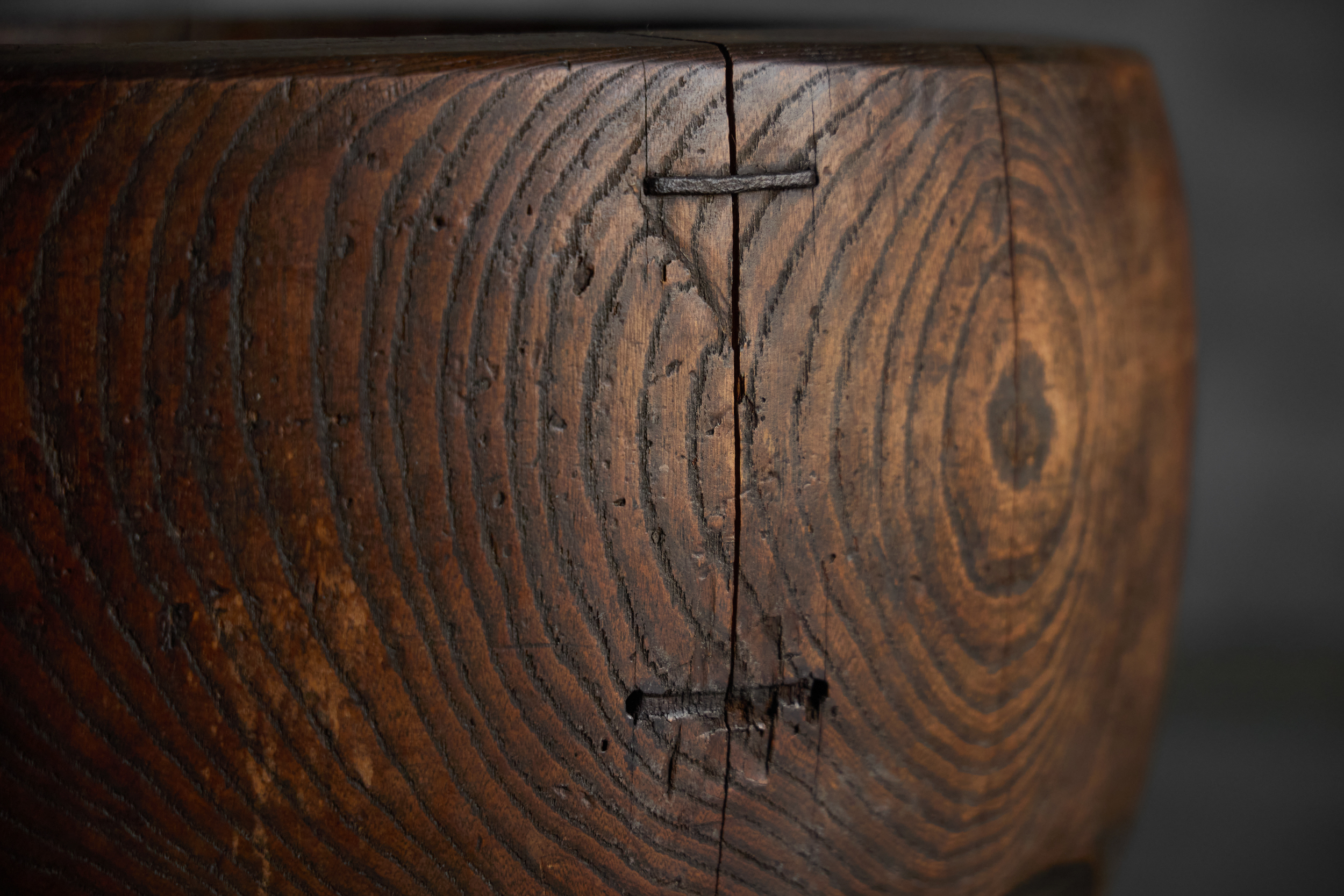
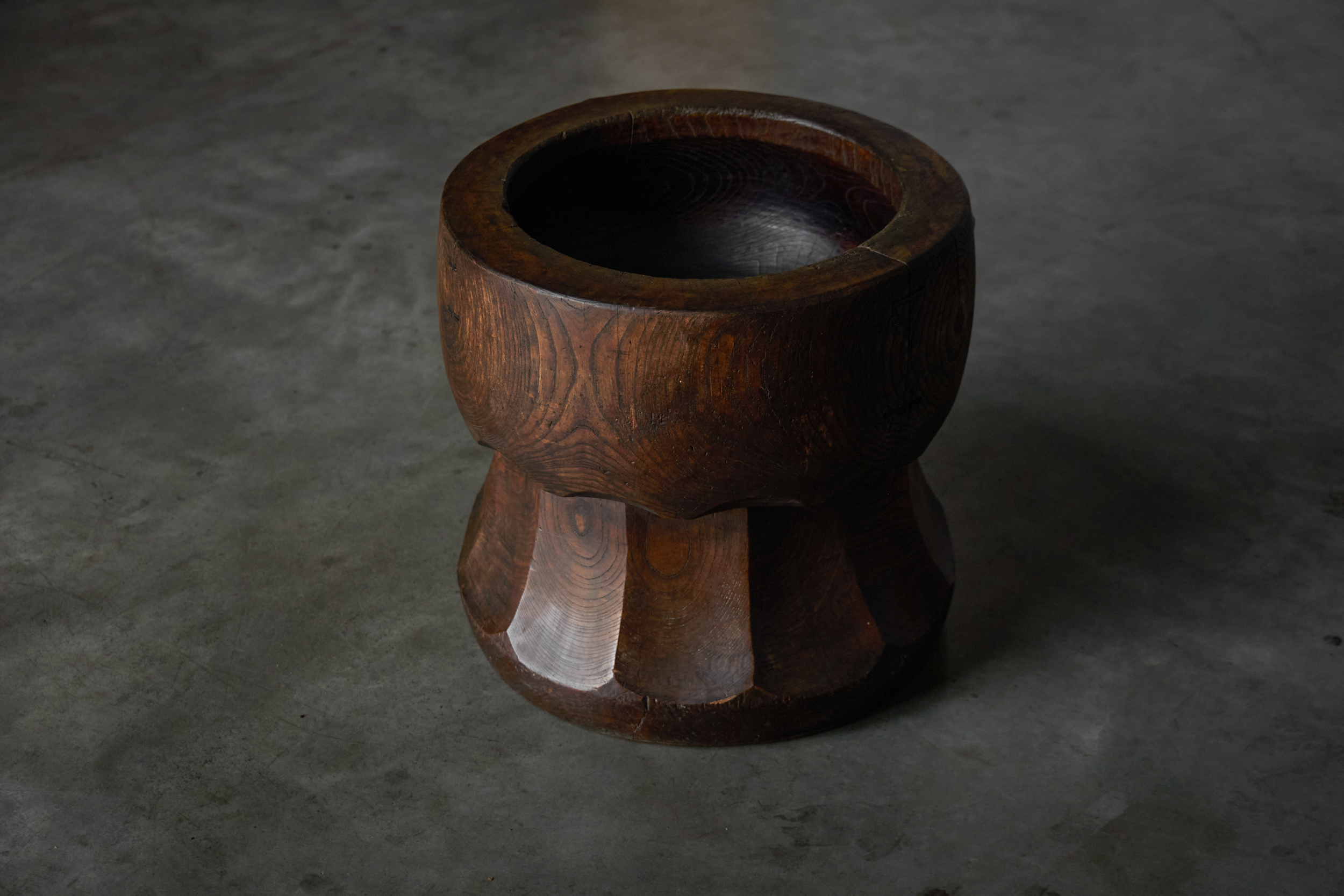
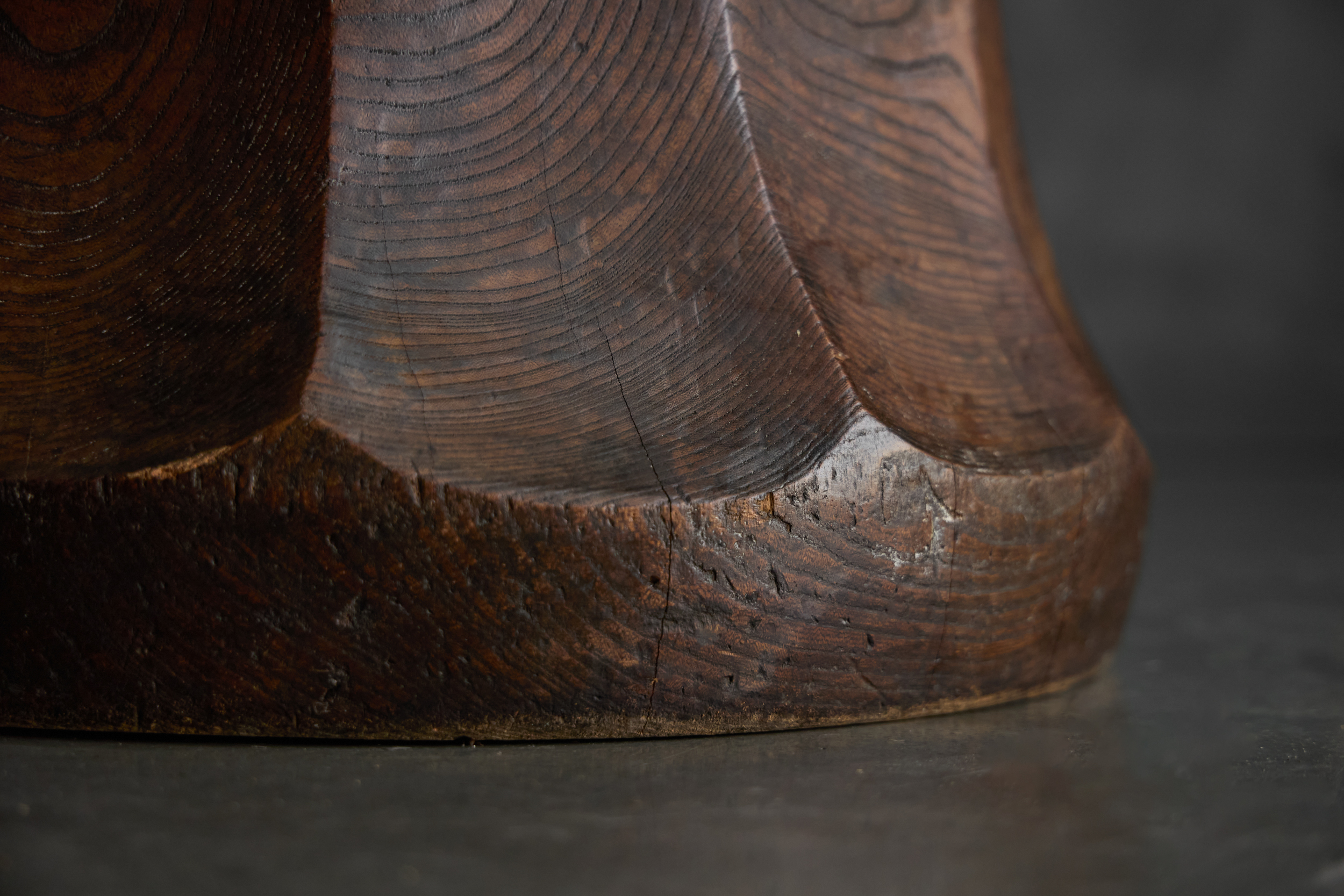
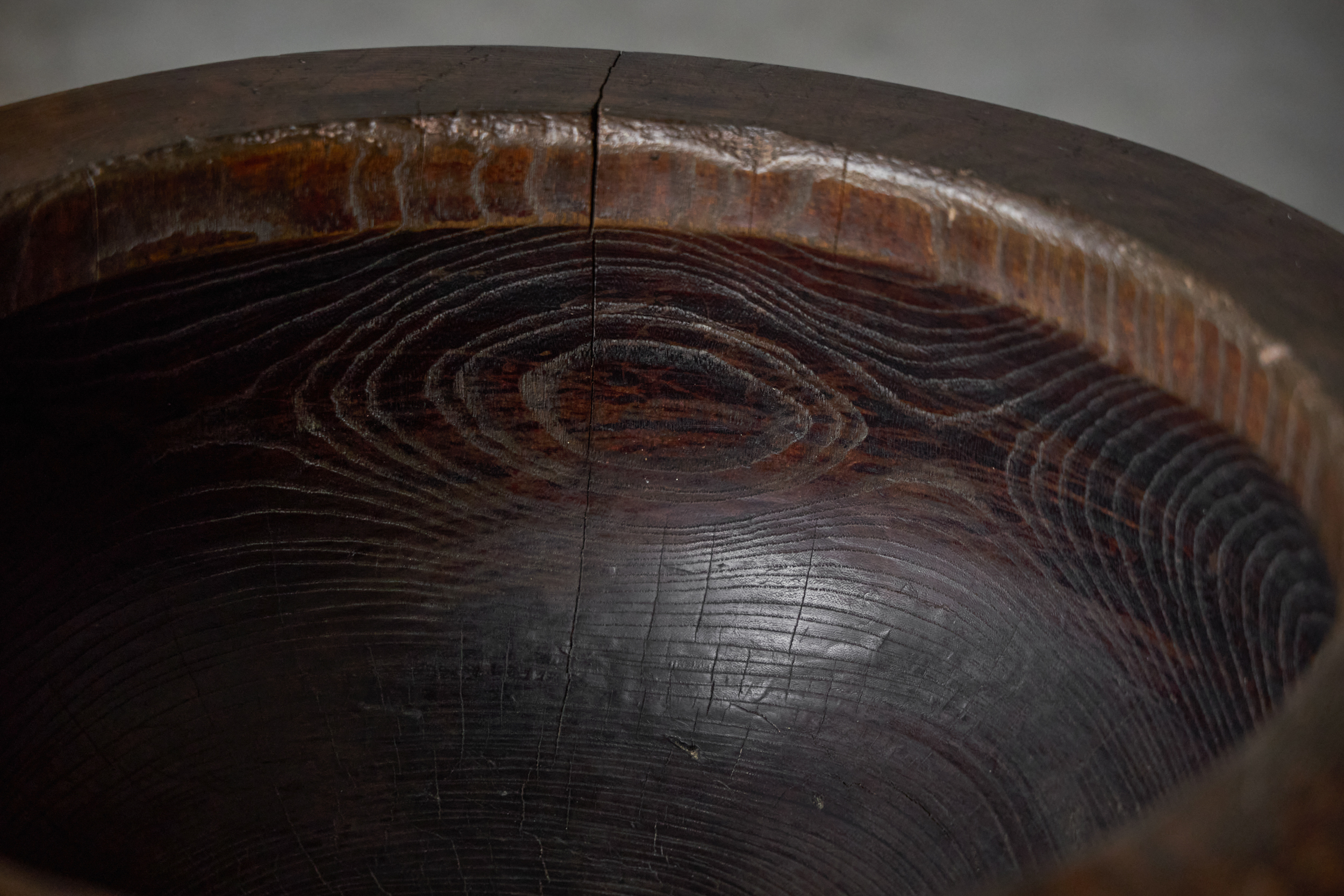
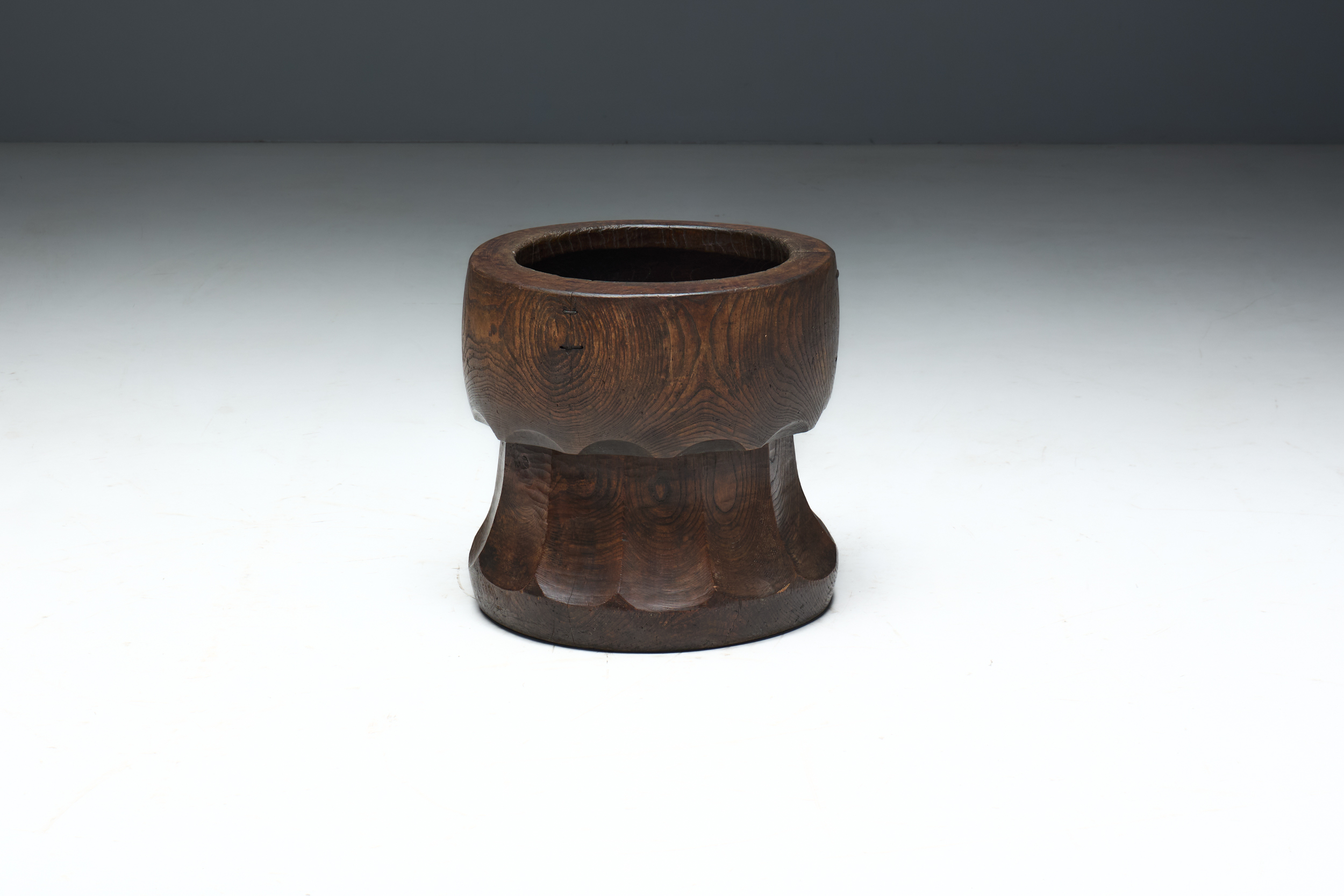
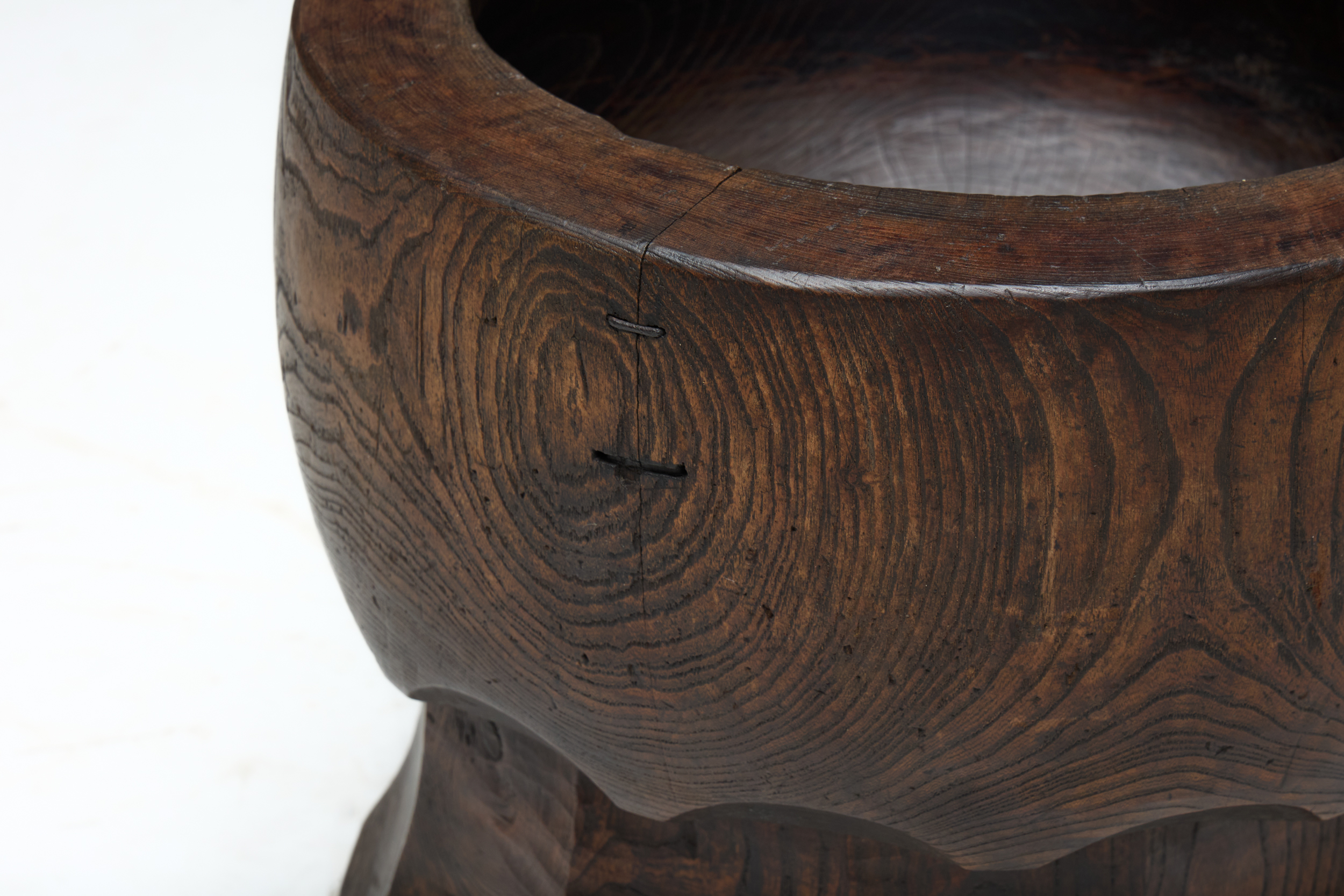
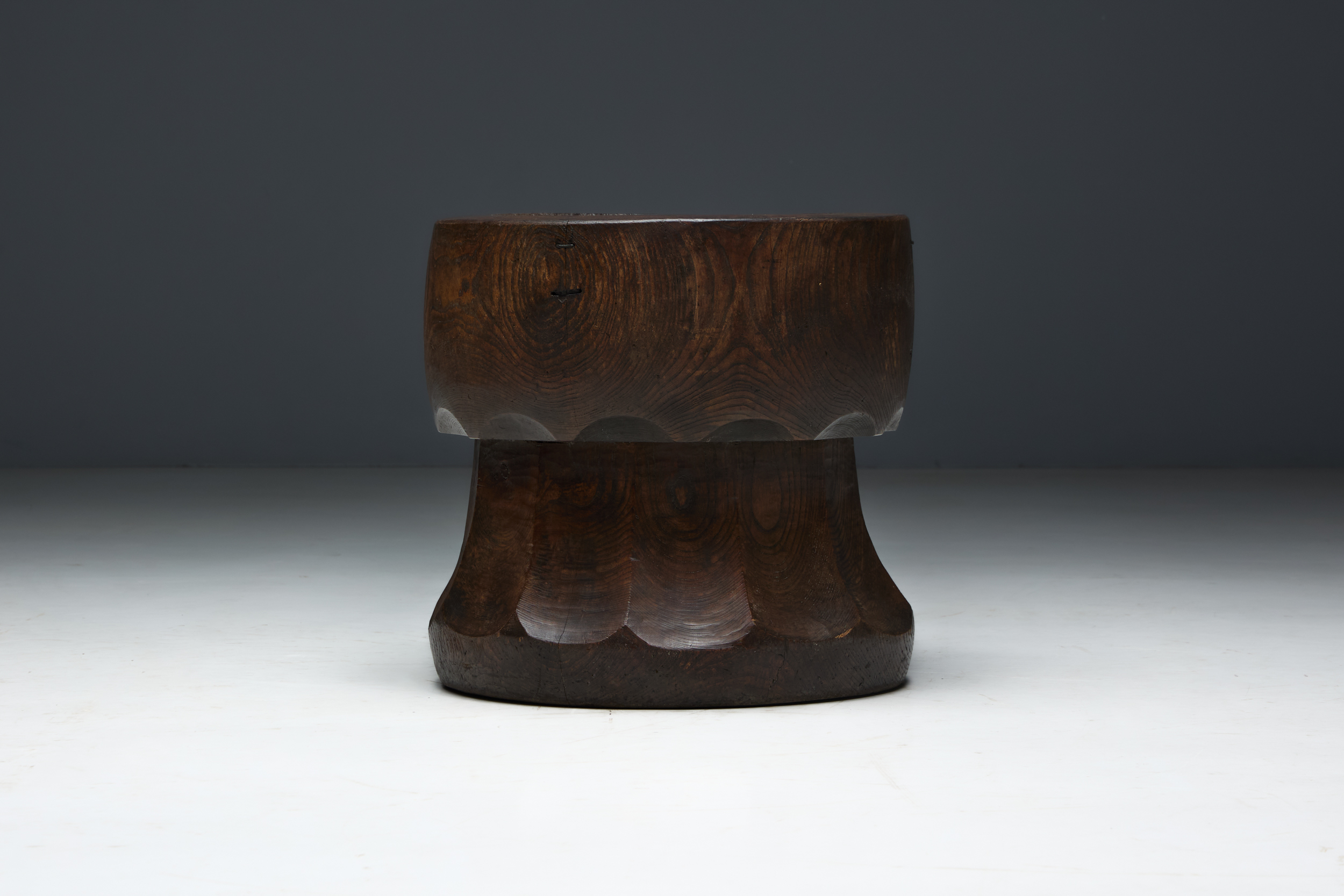
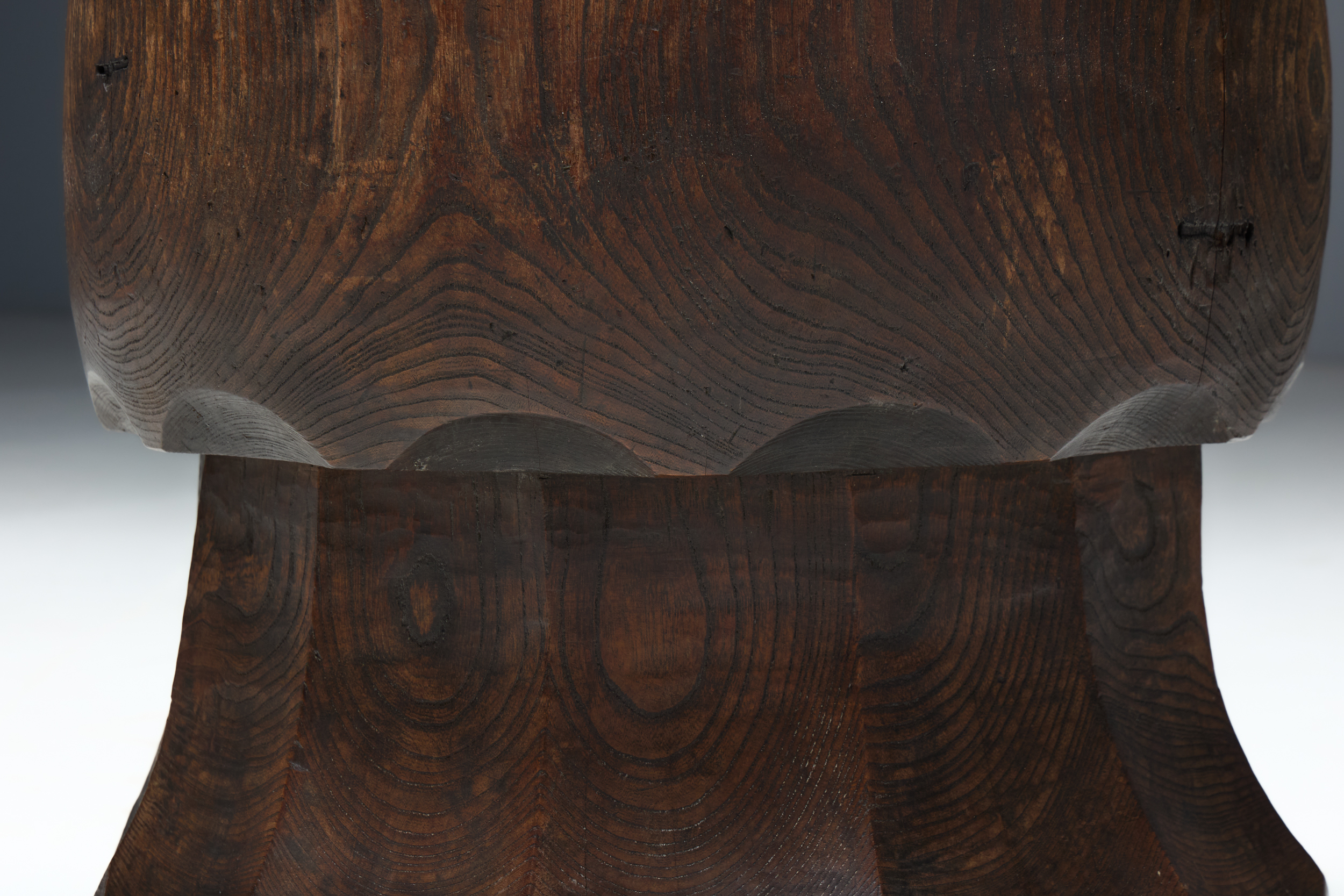
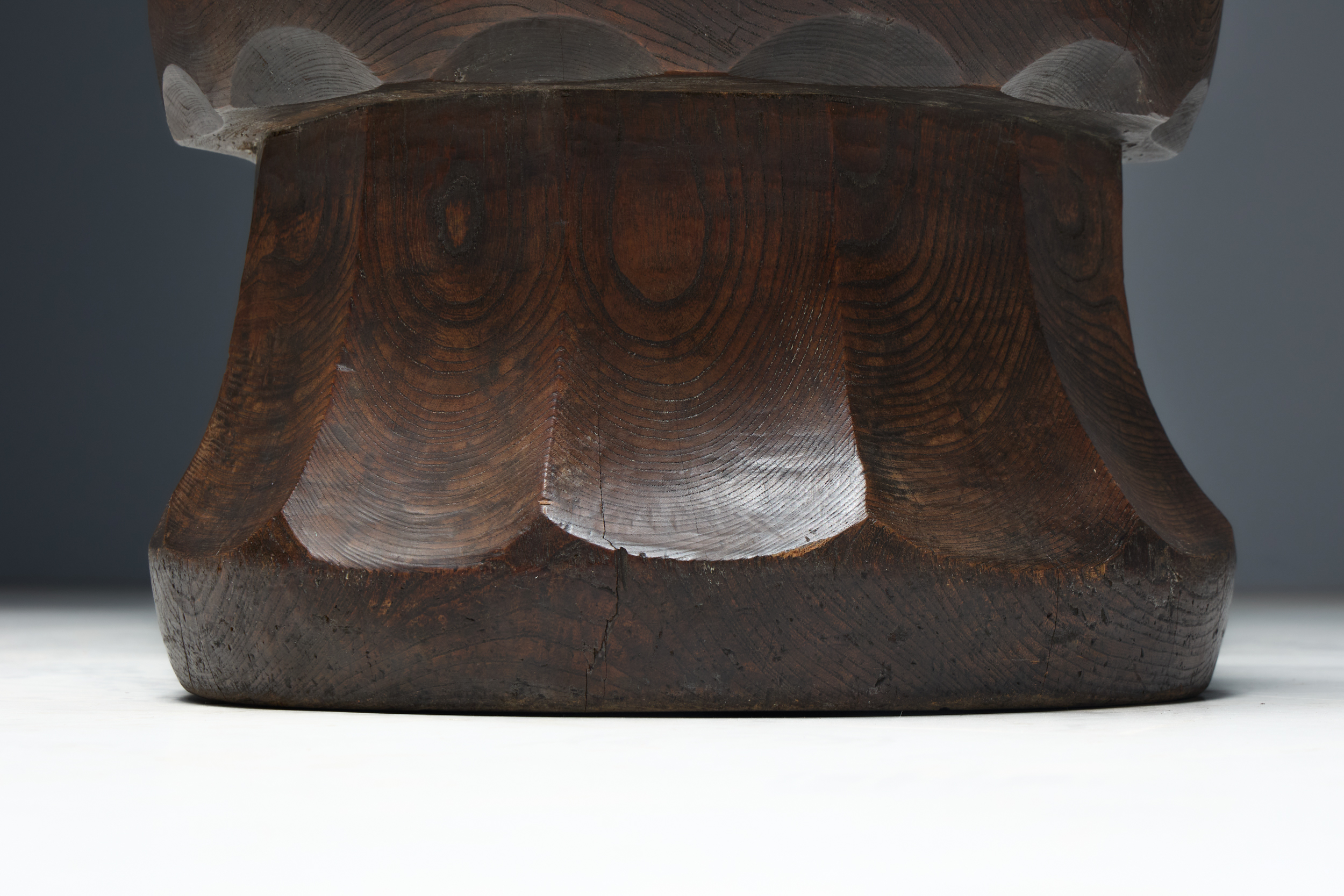
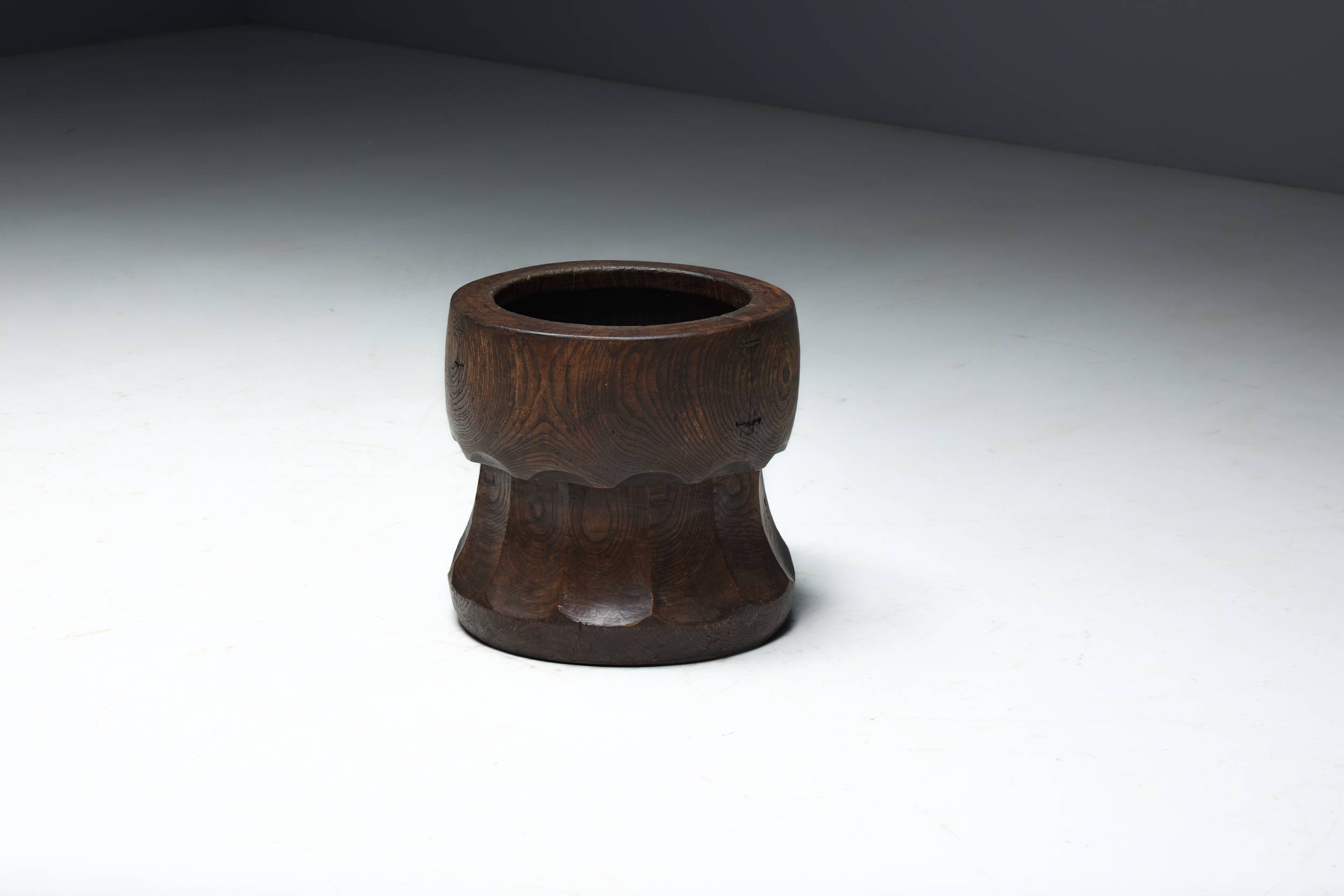
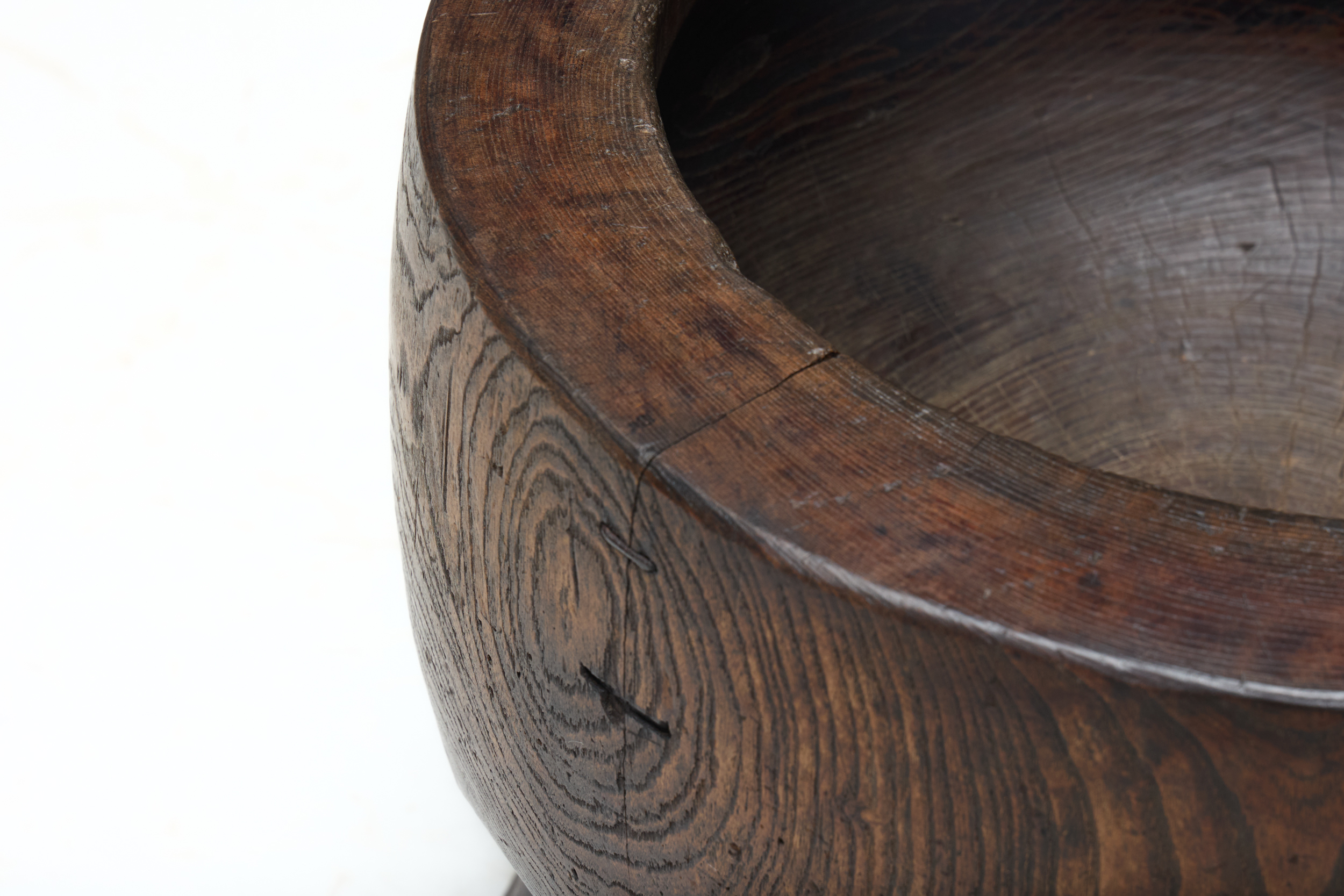
A hand-carved Japanese usu mortar whose sculptural form, rich patina and expressive craftsmanship elevate a traditional utilitarian object into a timeless work of vernacular design.
Hand-Carved Sculptural Usu Mortar, Japan - Early 20th Century
Description
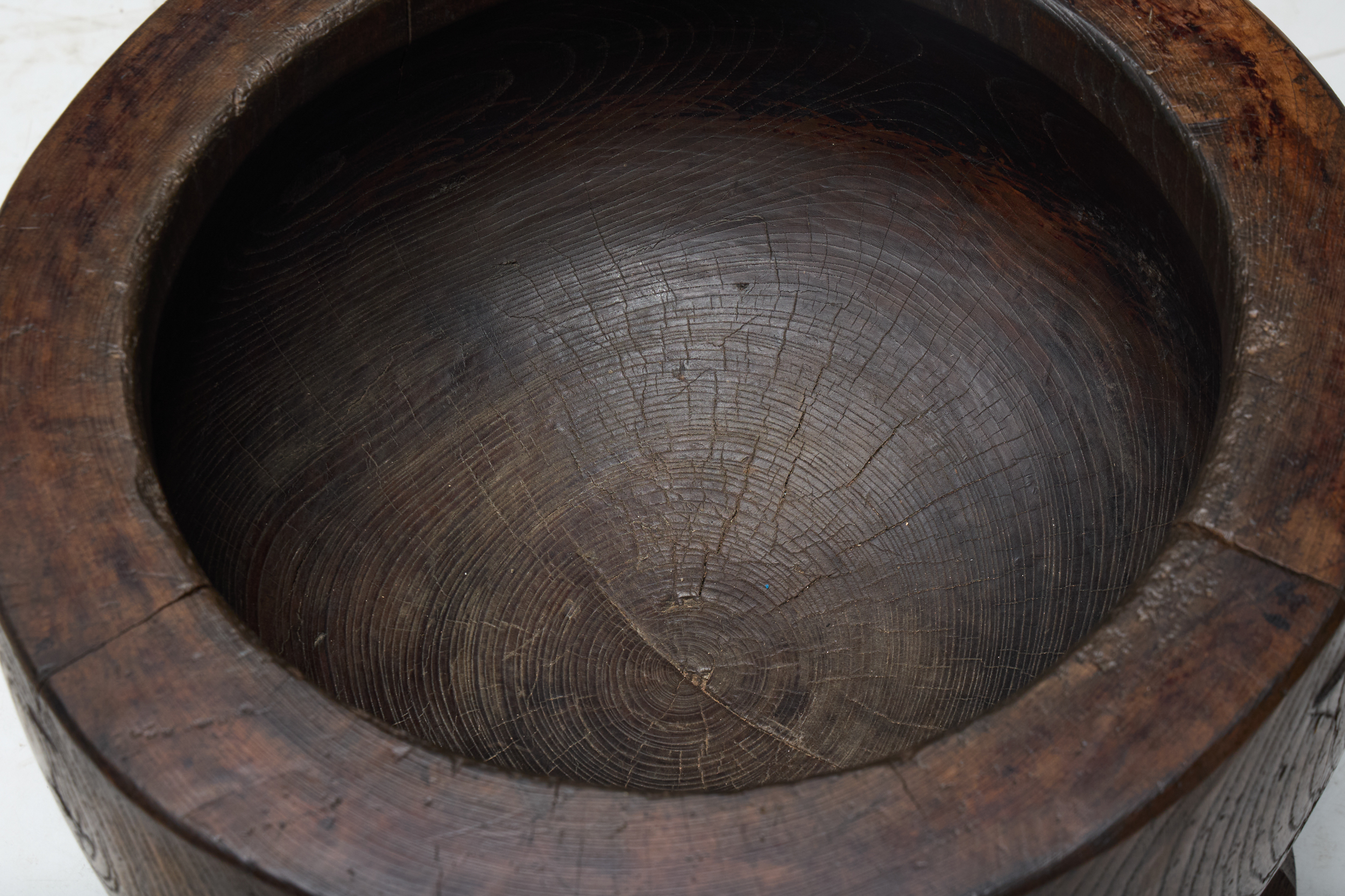
Hand-carved from a single, substantial block of wood, this Japanese usu mortar dates from the early twentieth century and was traditionally used in the preparation of mochi by pounding steamed glutinous rice. Distinguished by its pronounced waisted profile and rhythmic faceted carving, the vessel possesses a remarkably sculptural presence that extends beyond its original utilitarian purpose. The deeply hollowed interior reveals the natural growth rings of the timber, while the rich patina, age-related shrinkage, traditional repairs and accumulated traces of use testify to decades of functional service.
Rooted in the traditions of Japanese vernacular craftsmanship, the mortar embodies the quiet beauty of honest materials shaped by time and use. Today, it stands equally as a compelling sculptural object, reflecting the enduring principles of wabi-sabi through its balance of utility, material integrity and organic form. This object has undergone our standard two-cycle preventive woodworm treatment, ensuring its long-term preservation while respecting its historic character.
GW4657
- Materials
- Origin
- Dimensions
- Stock
I have a question about this product
Shipping Quote
-
EU€
-
Continental US€
-
Rest of worldPrice upon request
-
Local pickupFree of charge
Mario Bellini's Camaleonda Sectional Sofa - 1970s
Your Details: